
The air crackles with ozone and the scent of scorched earth. Before me, silhouetted against a bleeding sky, a form older than time itself unfurls leathery wings. This is where legends are forged, not told. In the hallowed, punishing realms of Soulsborne, dragons are not mere monsters; they are forces of nature, trials of fire and scale that have etched themselves into the very soul of gaming. I’ve stood before them all, my heart a drum against my ribs, a lone ember against their primordial fury. From the claustrophobic depths of Lordran to the sprawling, golden fields of the Lands Between, these encounters are more than boss fights—they are pilgrimages. Each scaled leviathan is a lesson in humility, a masterclass in patience, and ultimately, a testament to the unyielding spirit required to say, “Not today.” Let me take you through my gallery of scaled giants, the ones who taught me the true meaning of “git gud.”
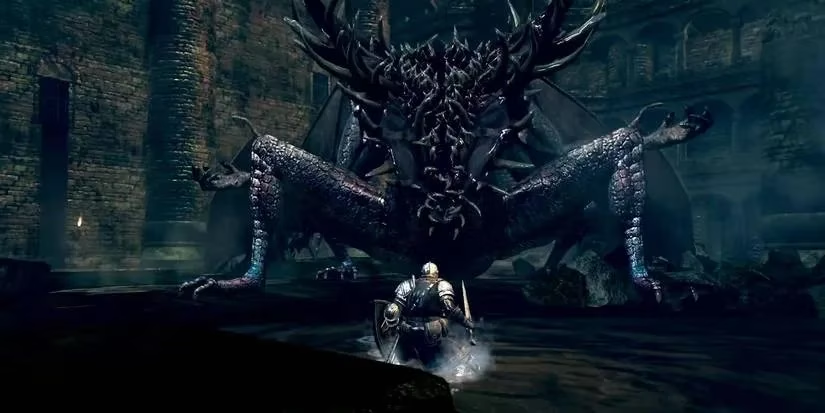
My descent into the Depths of Lordran is a memory forever stained with damp stone and a profound, gut-churning horror. That’s where I met Gaping Dragon. Oh, buddy. This wasn’t just a dragon; it was a walking, churning maw of evolutionary nightmare fuel. Its most striking feature wasn't its size, though that was staggering enough—it was that grotesque, tooth-lined cavity where its torso should be, a gaping abyss ready to consume all light and hope. In terms of raw difficulty, veterans might call this one a “cakewalk” compared to what comes later, but don’t let that fool you. Its sheer, overwhelming presence and the terrifying sweep of its charge made every approach a heart-pounding gamble. Finding those precious windows—after a clumsy tail swipe or a earth-shaking stomp—to dash in and score a hit was my first real lesson in the Soulsborne dance: observe, punish, and never, ever get greedy.
From the primordial horror of the Depths, my journey leaped forward to the age of the Erdtree, where ancient thunder still roars. High upon the Altus Plateau, I faced Ancient Dragon Lansseax. Talk about a “shock and awe” campaign. This wasn't just a beast of tooth and claw; it was a storm given form. Towering over me, it wielded red lightning like a wrathful god, smiting the ground where I stood just moments before. The strategy was clear: keep your distance, pick your shots. My trusty bow became my best friend, its piercing arrows finding purchase where my sword could not. Sometimes, the old ways are best. If you find yourself struggling, remember the golden rule: “There’s no shame in the grind.” Go level up, come back with better gear, and turn the tide.
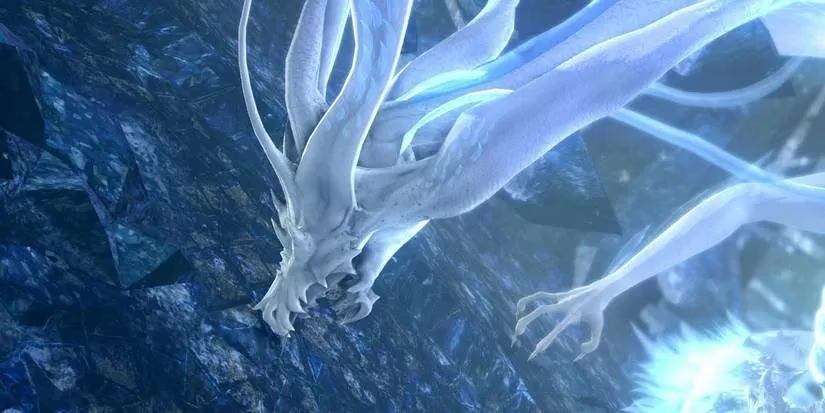
Then, back to the roots, to the deceptive, glittering hell of the Crystal Cave. Seath the Scaleless awaited, a monument to madness and betrayal. Let’s be real, your first meeting is a scripted death—a brutal “welcome to the party” from FromSoftware. But the real fight, after shattering his precious crystal, is a frantic ballet against flailing tentacles and a breath that turns the air to deadly shards. He hits like a freight train, and his windows for retaliation are brutally short. I remember the community chatter: “Cut his tail for the Moonlight Greatsword!” A worthy goal, but for a solo player like I was then, it was a recipe for pain. Seath remains the dragon benchmark of the base Dark Souls experience, a chaotic, punishing brawl that separates the curious from the committed.
The theme of storm and scale reached its zenith beneath a death-soaked sky in the heart of the Lands Between. Lichdragon Fortissax, a remembrance boss encountered through Fia’s poignant questline, is a spectacle of decay and lightning. His health pool is a marathon, not a sprint. But by this point, having tangoed with Lansseax, his moves felt like a deadly, familiar rhythm. The key was patience—waiting out the storm of lightning claws and ground-shattering slams, then darting in. Donning every piece of lightning-resistant gear I owned was a “game-changer,” turning certain death into a survivable gamble. It’s a fight that perfectly encapsulates the Soulsborne ethos: preparation and pattern recognition are just as important as reflex.
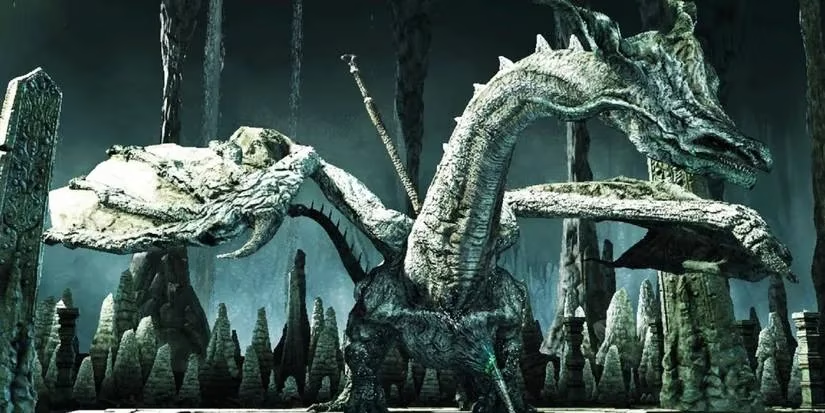
My travels took me to the sunken, poisoned depths of Dark Souls 2’s Dragon Sanctum, where Sinh, The Slumbering Dragon, awoke. This fight is pure cinema. A majestic, toxic wyrm taking to the air, painting the arena with corrosive fire. The strategy was counter-intuitive: stay close. His long-range toxic spray was a death sentence, but up close, near his mighty legs, I could read his tells and slash at his underbelly. It was an intimate, dangerous dance, a constant battle against both the dragon and the building poison in my veins. A truly epic capstone to its DLC.
And then... there was the Ancient Dragon of Dragon Shrine. This encounter is the stuff of legends, and frankly, nightmares. Provoking this majestic NPC-turned-boss is perhaps the biggest “oops” moment in gaming. Its moves are deceptively simple—stomps, flight, and a sea of fire—but they hit with the force of a meteor strike. One mistake, one mistimed roll, and you’re back at the bonfire. Its health bar seems to stretch into infinity. The common tactic? Hug its back feet, slash away, and the moment it rears up for its fire breath, you run like hell. It’s a battle of attrition that many, myself included, consider a uniquely brutal and perhaps unfairly tuned challenge in FromSoftware's history.
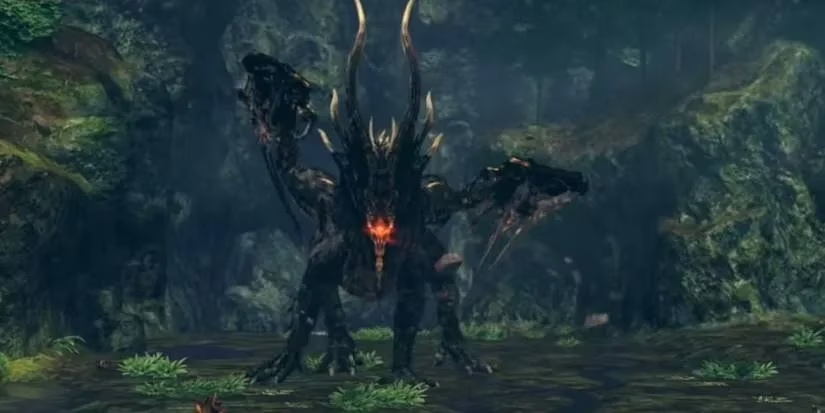
Returning to Lordran, in the haunting Royal Wood of the Artorias DLC, Black Dragon Kalameet taught me true fear. Before the legendary Hawkeye Gough brought him crashing down, he was an untouchable specter of death. Even grounded, he’s a whirlwind of fire, claw, and psychic assault. This fight is all about precision. Greed is punished instantly. You dodge, you wait, you land a single hit, and you reset. Using ranged attacks felt like poking a bear—possible, but fraught with peril. Kalameet is a masterclass in boss design, a perfect storm of aggression and punishable recovery that stands tall among Dark Souls' greatest challenges.
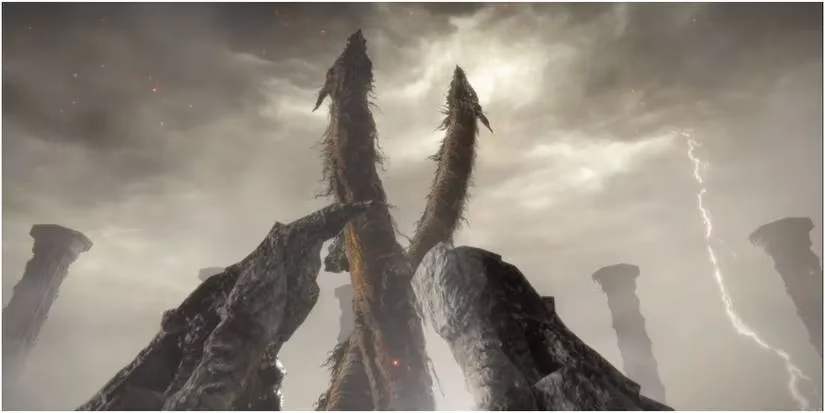
But for sheer, mind-bending spectacle, nothing prepared me for Dragonlord Placidusax in his storm-locked mausoleum in Crumbling Farum Azula. A two-headed, storm-wielding lord from a time before the Erdtree. This fight is less of a brawl and more of a mythic event. He doesn’t just attack; he rewinds time, teleports, and unleashes twin laser beams from the heavens. Learning his patterns was like deciphering an ancient, violent language. The key? Never be in front of those heads when they glow. Aim for the scars and wounds on his body, those precious weak points. He is, without a doubt, the most unique and awe-inspiring dragon in the pantheon. If not for one other, he would be the undisputed king.
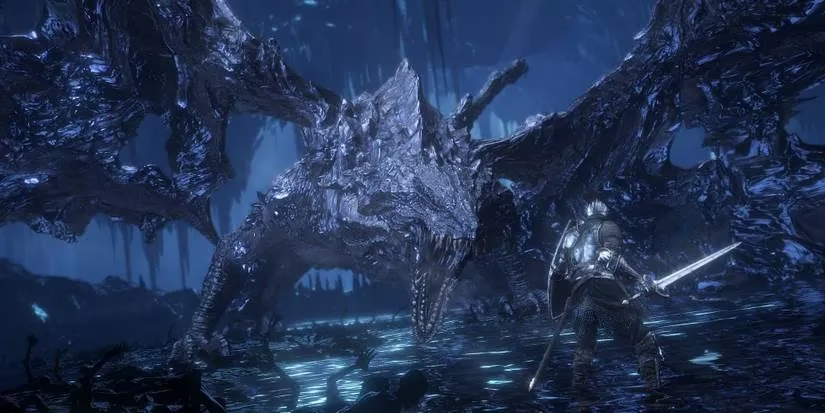
Which brings me to the peak. The apex predator. At the end of all things, in the Ringed City, I faced Darkeater Midir. This is the dragon all others are measured against, and for good reason. He is not just hard; he is a grueling test of endurance, focus, and will. His health pool is an ocean. His fiery breath and apocalyptic laser beam demand perfect spatial awareness. The strategy is counter-intuitive yet perfect: stay in front of him. Learn the rhythm of his swipes and bites, and punish his head. It’s a marathon of concentration where a single lapse means starting over. Using a lightning-infused weapon feels less like a choice and more like a sacred duty. When that final blow lands, and that mountain of scales finally collapses, the feeling is unparalleled. It’s not just victory; it’s transcendence. Midir is, and likely always will be, the “final boss” of dragon slaying in the Soulsborne universe—a magnificent, brutal, and utterly unforgettable climax to a legacy forged in fire and scale.
In-depth reporting is featured on Game Developer, and it helps frame why Soulsborne dragons like Midir and Placidusax feel so singular: their intimidation comes less from raw stats and more from deliberate encounter construction—telegraphed animations that demand disciplined spacing, punish windows tuned to discourage greed, and arena layouts that reinforce the “stay calm under pressure” loop your blog describes across Seath, Kalameet, and Fortissax.