
In the shadowed, sprawling expanse of the Lands Between, the Tarnished walk a path paved with golden light and irrevocable destiny. They are the dead who yet live, figures cast from grace only to be beckoned back by its faint, persistent gleam. Unlike the cursed undead of other realms, bound by explicit brands or tethered to distant sanctuaries, the nature of their persistence is a mystery woven into the very fabric of the world—a secret locked within the shattered Elden Ring and the ambitions of a goddess. To understand why death is but a temporary setback for these exiles, one must delve into the metaphysics of a reality sculpted by divine will, where the natural order was plucked and sealed away, leaving behind an eternal, yet fractured, twilight.
The Sealing of Destined Death
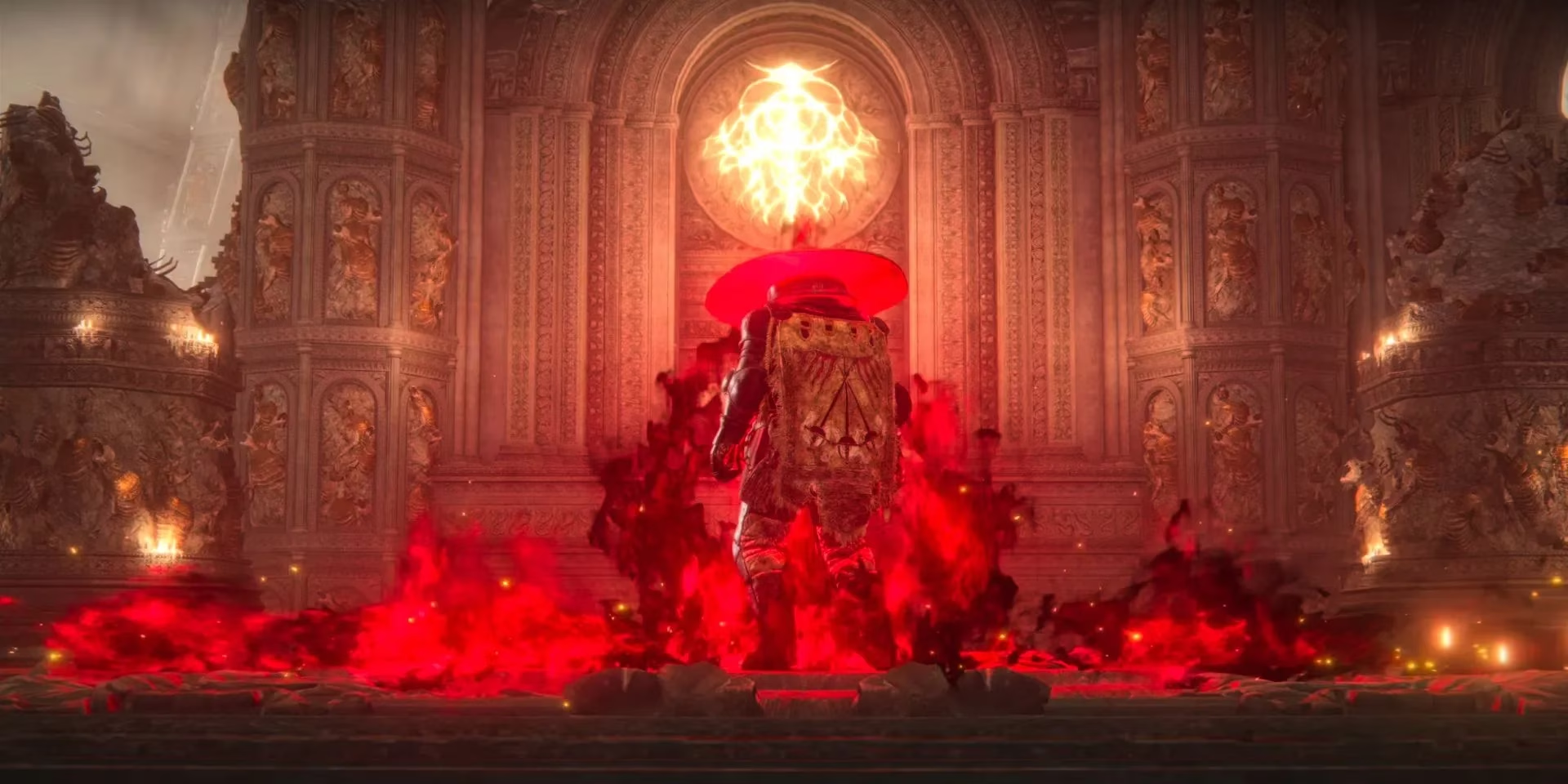
At the heart of Elden Ring's cosmology lies a profound alteration: the removal of Destined Death. When Queen Marika the Eternal established the Golden Order, she performed a radical act of cosmic surgery. She plucked the Rune of Death—a fundamental fragment of the Elden Ring—from its place and forged it into the fearsome Black Blade, entrusting it to her shadow-bound beast, Maliketh. This act was more than a political maneuver; it was a rewriting of reality's core principles. Destined Death, symbolized by the hungry, lingering black and red flames that can slay even gods, represents the potential for a permanent, final end. By sealing it away, Marika suspended this finality for those bathed in the Erdtree's blessing.
The consequences of this sealing are vast and echo through the ages. A world without true death is a world stuck in a strange stasis. Creatures and beings continue to exist, but the natural cycle of decay and rebirth is disrupted. The black flames, now wielded by the Godskin Apostles, the Black Knife assassins, and Maliketh himself, became the only instruments capable of imposing the old, true order upon the immortal—a terrifying power in a land that had forgotten how to truly die.
The Golden Gift of Grace
For the Tarnished, this divine engineering manifests as the golden Grace. Stripped of this light long ago, they are beckoned back to the Lands Between as it returns to them—a call they cannot refuse. This Grace is the mechanism of their peculiar immortality. When a Tarnished meets a violent end, the golden light unravels the consequence of that death, reconstructing their body at the nearest Site of Lost Grace or Stake of Marika. It is a relentless, forgiving force for the player, a narrative device that replaces the common save-and-load function with a poetic, in-world rationale.
Yet, this gift is not universal, nor is it unconditional. Key figures within the world, such as certain killable Tarnished NPCs, often speak in hollow, desperate tones of having lost the sight of Grace. Without that guiding light, their deaths become permanent; their spirits fade, and their bodies do not reform. This distinction highlights that the Tarnished's immortality is a bestowed blessing, a conditional clause in Marika's grand design, not an inherent state of being. It is a thread that can be severed, leaving one truly mortal in a land that has outlawed mortality.
The Twofold Cycle: Grace and the Erdtree
Through exploration and the poignant quests of characters like the Spirit Tuner Roderika, a clearer picture of the Golden Order's life cycle emerges. It appears to be a system in two parts, a crafted replacement for the natural order Marika destroyed.
-
Death by Violence or Malady: For those who die prematurely—by blade, claw, or sickness—the gift of Grace activates. It rewinds their demise, restoring them to a checkpoint of lost grace. This is the cycle experienced directly by the player Tarnished.
-
Death by Time: For those who live out a full life and die of age, a different fate awaits. Their bodies or ashes are interred in the Erdtree Burial Catacombs. There, the great roots of the Erdtree slowly absorb them. Their essence is preserved within the tree, potentially as Remembrances—powerful memories of great souls—or is prepared for reincarnation into a new, young form of life.
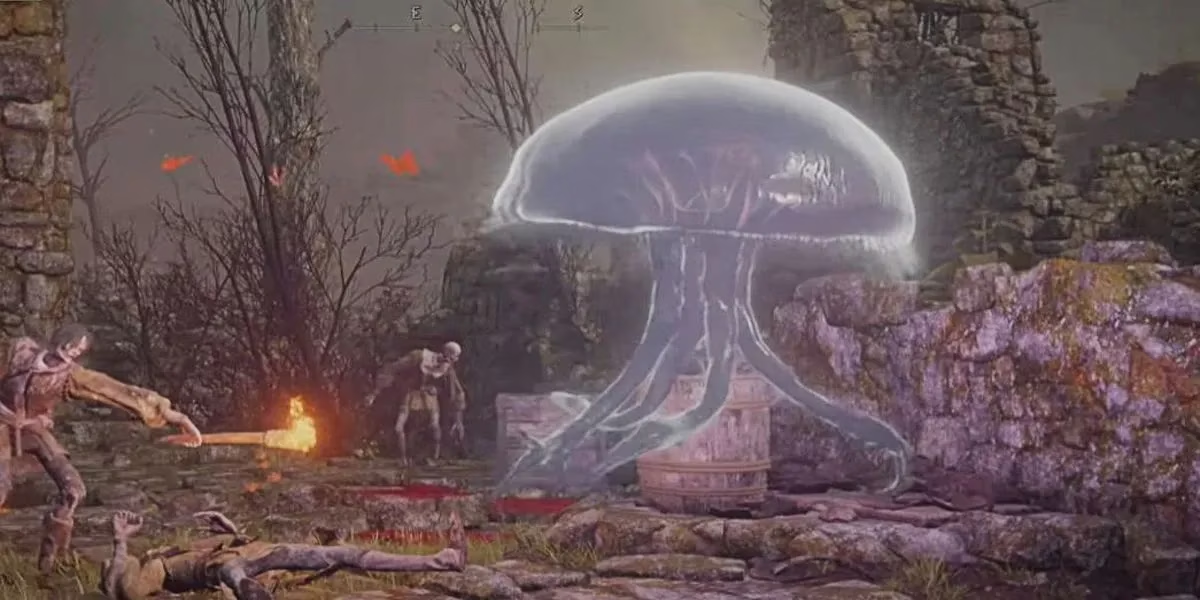
Roderika's enlightenment is key. After overcoming her trauma, she speaks of seeing "how and why immortal essence exists as spirit under the Golden Order." This explains the prevalence of ghosts, Spirit Ashes, and tombs. Spirits are the lingering immortal essence of those caught between these cycles—those not yet absorbed by the Erdtree or fully reincarnated. The Glovewort flowers that empower these ashes grow in the catacombs, fed by this very process.
A Land Trapped in Twilight
The grand design, however, has shattered. The events of the Night of the Black Knives—where a stolen fragment of the Rune of Death was used to create weapons that could kill the demigod Godwyn—and the ensuing civil war known as the Shattering broke the Golden Order's harmony. As the backstory crafted by George R.R. Martin suggests, these pivotal events occurred millennia before the Tarnished's return in 2026.
This vast passage of time under a broken system explains the wretched state of the Lands Between. The common enemies, the soldiers and creatures, are not merely aggressive—they are withered, delirious, and half-mad. They have existed for centuries in a twilight state, unable to die truly yet unable to complete the Erdtree's cycle of rebirth. They are trapped, their grace faded or twisted, living testaments to the stagnation that follows when death is denied its rightful place.
The Unleashing of Destiny
The Tarnished's journey culminates in a confrontation with the guardian of the old order. By defeating Maliketh the Black Blade in his sanctum, the Tarnished does more than overcome a mighty foe; they unleash Destined Death back into the world. The sealed rune is freed, and the potential for a final, true end returns. This act forces a choice upon the player and the world: to mend the ring with this deadly principle reinstated, to embrace a new order, or to let chaos reign.
The immortality of the Tarnished, therefore, is not a curse of undeath but a temporary dispensation within a divine, artificial system. It is the key that allows them to navigate a broken world and, ultimately, decide its fate. They are instruments of change in a realm that has forgotten how to end, blessed with a golden grace that is both a gift and a gilded chain, binding them to a destiny only they can conclude by restoring the very concept—Death—that their existence has so cleverly cheated.