
In the twilight of the Age of the Erdtree, where golden boughs once cradled a shattered world, the Tarnished walk among echoes of ruin and whisper of ancient hungers. The very soil of the Lands Between seems steeped in a silent question: what would one devour to become divine? Since its coronation as Game of the Year in 2022, Elden Ring has continued to haunt the imagination, not least for its quiet, persistent thread of cannibalism—a thread woven by the dark pen of George R.R. Martin and embroidered by FromSoftware’s merciless design. It is a realm where the body is no temple, but a vessel to be consumed, and consumption itself becomes a twisted prayer for power, love, or mere survival.
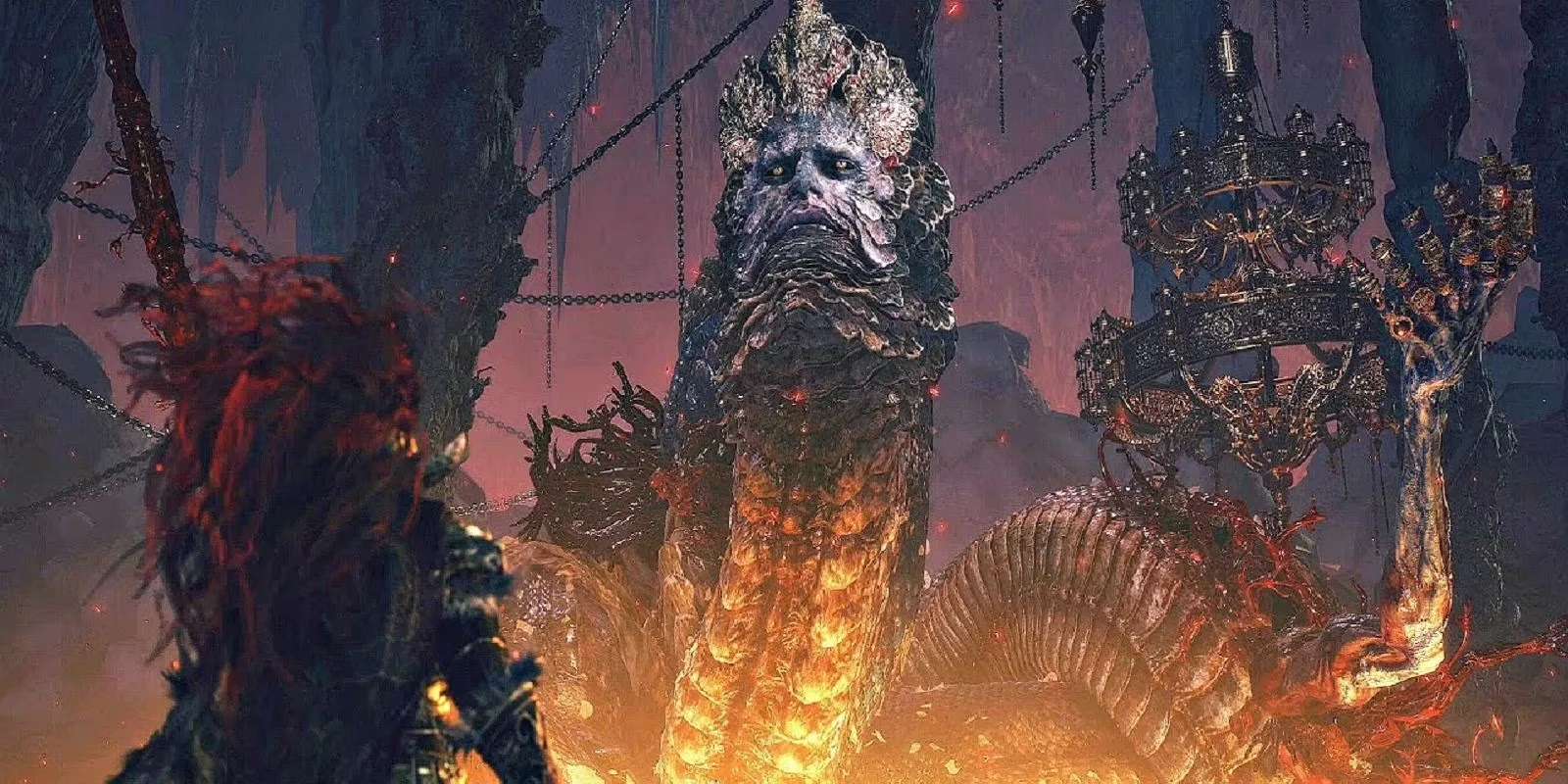
Why does the act of eating flesh so often surface in this sunless mythology? Is it the desperation of gods who have outlived their purpose, or the quiet rebellion of those who refuse to fade? The answer lies not in abomination alone, but in the peculiar intimacy of devouring—the ultimate union between the eater and the eaten.
The Sacraments of Hunger
The shattering of the Elden Ring birthed not only war but a famine of meaning. Demigods, once radiant, now skulk in their crumbling domains, clutching the remnants of their runes. In this vacuum, cannibalism becomes a sacrament, a desperate liturgy. Consider Hyetta, the wayfaring maiden whose slender fingers accept not bread or wine, but eyeballs. She consumes them with a quiet reverence, as if each vitreous orb were a rosary bead leading her closer to the Frenzied Flame. Her feast is a paradox—she gains not physical strength, but a deeper connection to a primordial chaos. Does she see more clearly as she swallows the sight of others? Or does she merely extinguish the world, one pupil at a time?
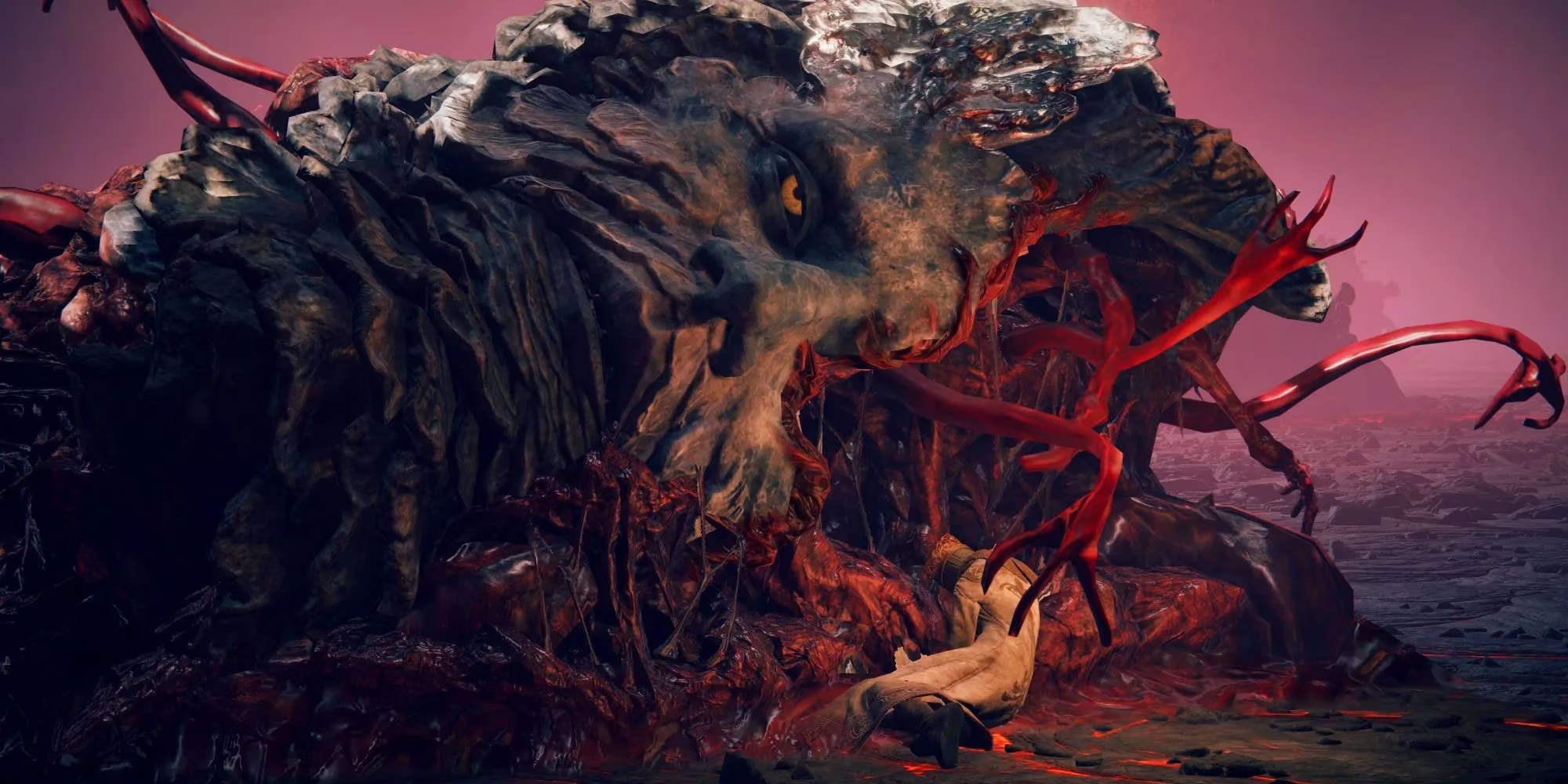
Then there is Tanith, the Lady of Volcano Manor, whose love for Rykard transcends the grave. After the champion of blasphemy is felled, she is found kneeling beside his serpentine corpse, her face smeared with carrion. “Rykard will live on within me,” she murmurs, as if ingestion were resurrection. It is not power she seeks, but an eternal communion—a dark Eucharist where the beloved becomes the body consumed. Yet, what blossoms from such a gruesome sowing? Rykard's essence does not stir; no new lord rises from her stomach. Her act remains a solitary dirge, a devotion that nourishes nothing but her own sorrow.
The Warrior Jar's Unending Appetite
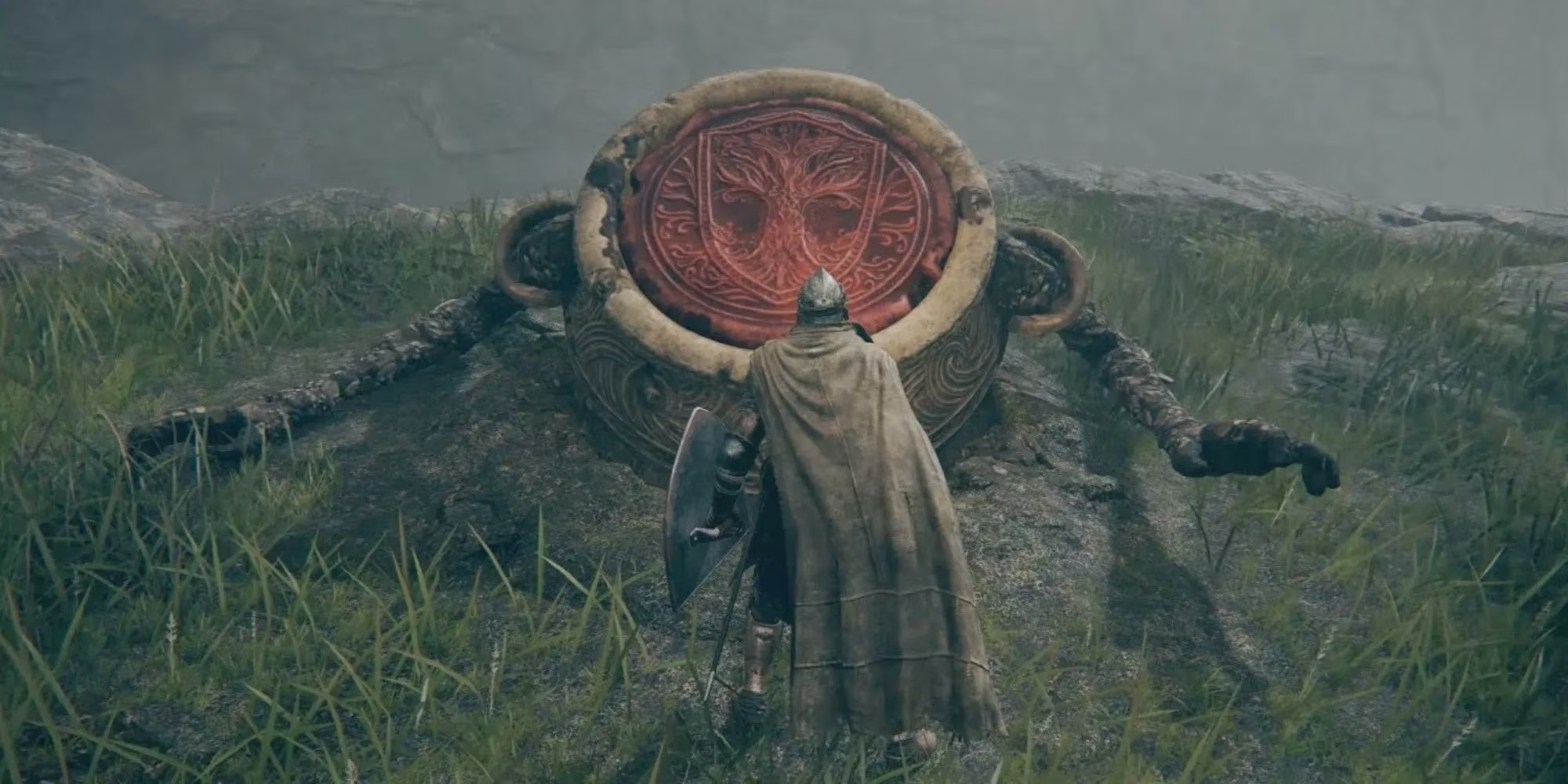
What of Alexander, the Iron Fist, whose jovial heart beats within a vessel of clay? He roams the battlefields gathering the remains of the mighty—warrior after warrior, and finally the scarlet radiance of Radahn himself. Is he a cannibal, or something purer? A living jar is, after all, a repository of spirits, and the flesh he stuffs within himself is not merely eaten; it is honored, incorporated into a greater warrior's corpus. Alexander's hunger is a pilgrimage. Each corpse he consumes becomes a link in his inner chain, a step closer to a perfection that forever eludes him. When he finally begs the Tarnished to shatter his form, does he finally taste the strength he sought, or does he only discover the hollowness of the vessel?
Survival’s Quiet Teeth
Not all consumption wears a crown. In the fields of Limgrave and the blood-soaked camps of Caelid, common soldiers kneel beside their fallen comrades. With practiced, hollow movements, they tear flesh from bone, driven not by ambition but by a primal terror of starvation. The Lands Between grant no mercy; the Erdtree’s grace does not fill the belly. These silent acts are perhaps the most damning sermon of all: when the divine has abandoned the world, men become mere animals. Yet, do they ever gain a glimmer of strength from their brothers' flesh? The game offers no answer, only the chilling tableau of feast turned to survival.
A Banquet of Themes
Cannibalism in Elden Ring is never simply grotesquery; it is a mirror. It reflects the obsessive love that drives Tanith to consume her lord, the deluded faith of Hyetta, the glorious and futile ambition of Alexander, and the bleak necessity of forgotten soldiers. FromSoftware’s genius lies in making this bestial act feel almost tender—a distorted lullaby sung at the end of an age. The body, in these tales, is at once currency, altar, and coffin. Does consuming another truly transfer their essence, or is it merely the final act of a soul too afraid to be alone?
As the years pass since the game’s release, these dark threads grow more resonant. In an era where the world grapples with its own hungers—for meaning, for connection, for survival—the Lands Between offer a twisted reflection. They ask: what are you willing to consume to fill the void?
The Unending Meal
Rykard fed himself to the Serpent-King, merging flesh with the primordial, becoming a god-devouring serpent that would one day swallow the world. Tanith tried to follow, swallowing him in turn, yet the chain broke. Hyetta’s scleral feast opened a door to the Frenzied Flame, but whether she found enlightenment or annihilation, none can say. Alexander’s grand consumption ended in shards, his strength bequeathed not to himself but to the one who broke him. Even the simple soldiers, gnawing at cold limbs, continue a ritual that began long before the Erdtree’s shadow fell.
The Lands Between do not judge; they only witness. Every bite is a prayer, every swallow a confession. And perhaps, as you guide the Tarnished through these haunted vistas, you might pause and wonder: in a world where the line between flesh and divinity is so thin, who is truly the feast—and who is the next to sit at the table?
The article draws its dark inspiration from the lore of Elden Ring, a masterpiece that continues to unravel its secrets even as we stand in 2026.