
Imagine a library so profound, so architecturally defiant, that it holds not one, but two entire realities within its walls. This is no mere fantasy; this is the staggering reality of the Carian Study Hall in the world of Elden Ring. Nestled on the eastern shores of Liurnia of the Lakes, this structure is far more than a simple dungeon—it is a gateway, a puzzle, and a testament to FromSoftware's unparalleled genius in environmental storytelling. While many Tarnished may stumble upon its initial form, believing they have conquered its secrets, the true journey, the one that leads to destiny-altering rewards, requires seeing the world—quite literally—turned upside down.

The Deceptive First Layer: A Library of Illusions
At first glance, the Carian Study Hall presents itself as a formidable but conventional challenge. Tarnished warriors battle through scholarly halls, confront the teleporting menace known as Preceptor Miriam, and collect treasures like the Sorcery, Magic Downpour. It feels complete, doesn't it? A satisfying, self-contained dungeon. But what if this entire experience was merely a prologue, a cleverly designed decoy? The initial form of the Study Hall is a masterclass in misdirection. Its true purpose remains locked away, hidden behind a veil of normalcy. The rewards here are tangible, yet they pale in comparison to the cosmic secrets waiting just beyond perception. This begs the question: why would the Carian Royal Family construct such an elaborate facade?
The Inversion: A Quest That Rewrites Reality
The key to unlocking the Study Hall's second soul is not found within its walls, but woven into the fabric of one of the game's most epic narratives: the questline of Ranni the Witch. Upon proving their worth, Ranni bestows upon the Tarnished the Carian Inverted Statue—an artifact that is both a key and a prophecy. Placing this enigmatic figure upon the pedestal in the entrance hall is not just an action; it is a ceremony. The very laws of physics within the tower shudder and rebel. In a breathtaking display of arcane engineering, the entire structure inverts itself. This isn't a simple visual trick; it's a fundamental reconfiguration of space. The water flows upward, windows become doorways to impossible climbs, and familiar corridors become disorienting, gravity-defying paths. The genius of this design is staggering—it was planned from the very first stone laid.
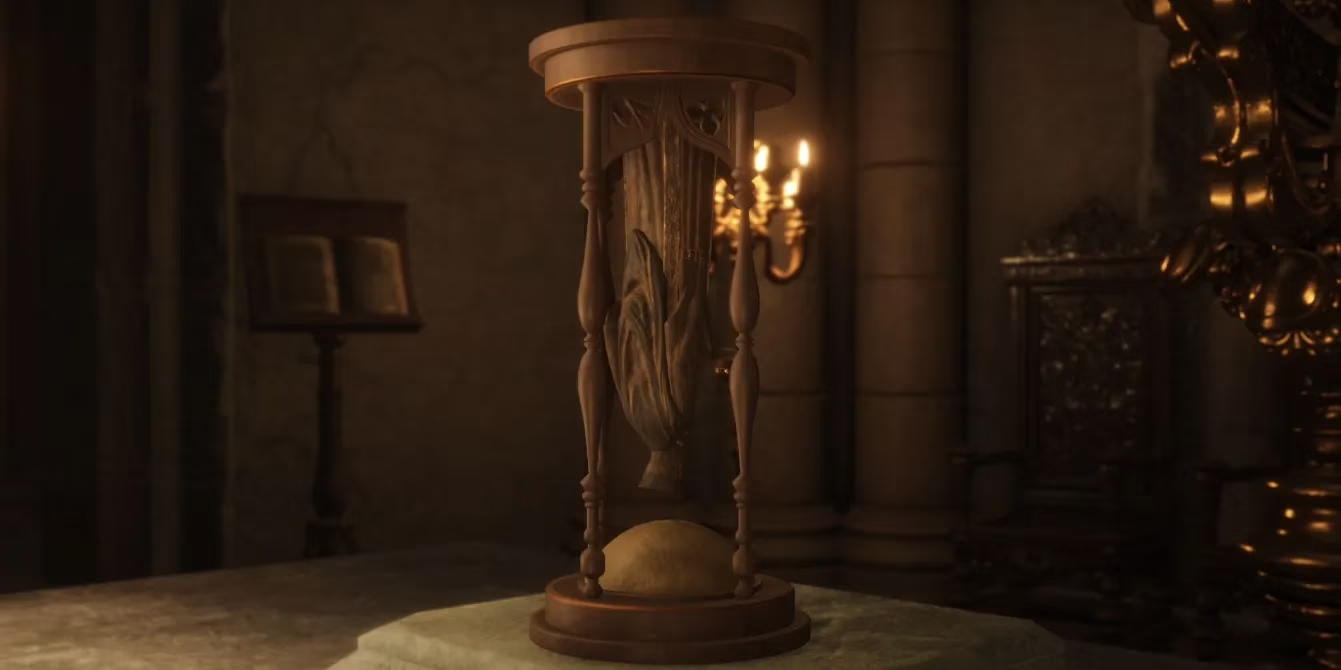
Navigating this topsy-turvy nightmare is a challenge equal to any boss fight. Preceptor Miriam returns, her magical arrows now raining from bizarre angles, forcing the Tarnished to re-learn combat in a world where down is up and up is a lethal fall. Victory here yields the Sorcery Lucidity—a fitting reward for maintaining sanity—and the  Mask of Confidence. Yet, these are but trinkets offered for surviving the antechamber. The real treasure, the destiny-shaping loot, lies at the journey's end, where the inverted tower bridges the gap to a place of divine significance.
The Ultimate Prize: Gateway to the Divine Tower
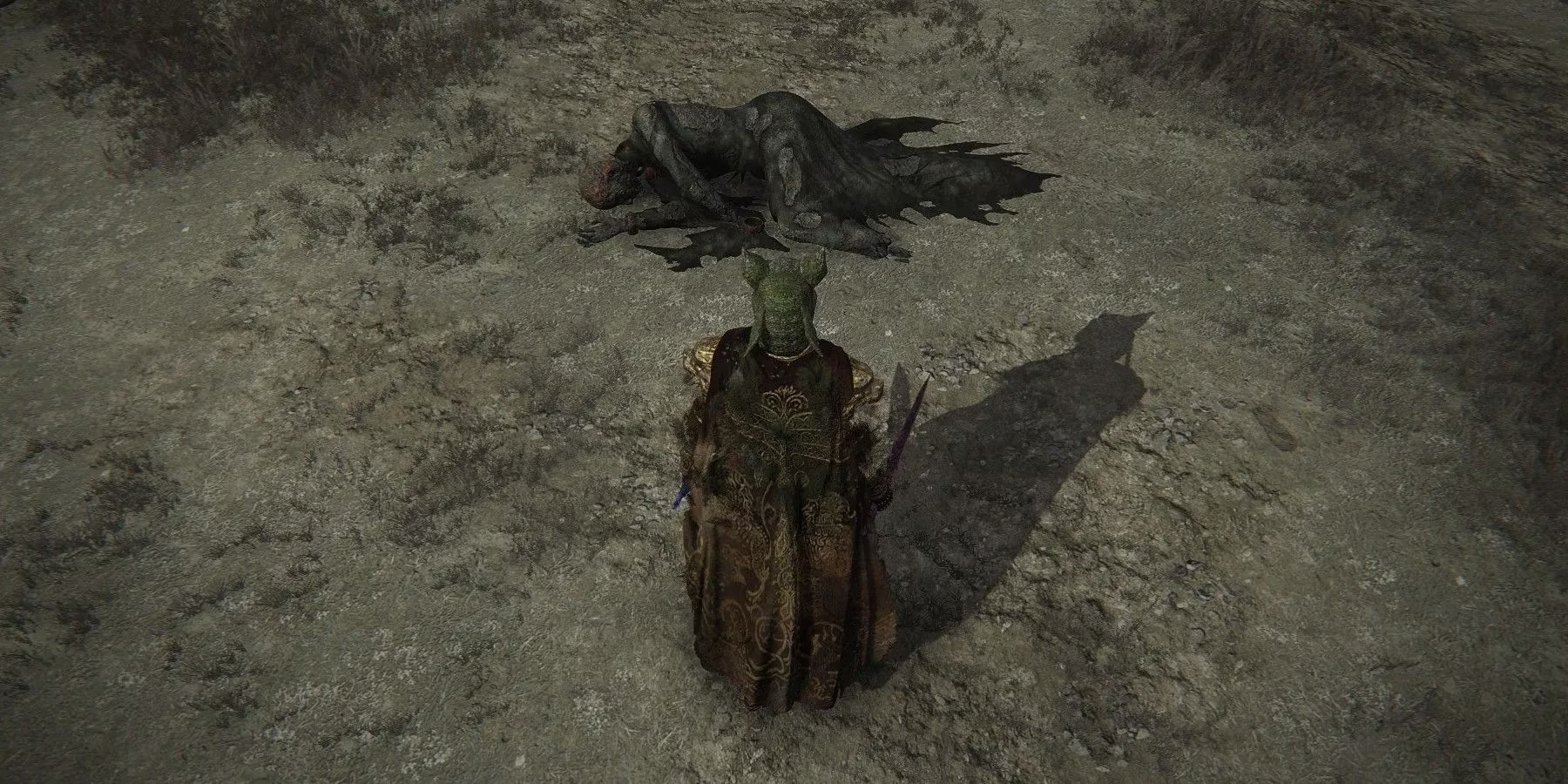
If a Tarnished possesses the skill and perseverance to conquer the inverted labyrinth, they are granted access to one of the Lands Between's most solemn sites: the Divine Tower of Liurnia. Guarded by a formidable Goldskin Noble, this tower holds no Great Rune for restoration. Its significance is far more profound and personal. At its peak rests a solitary corpse, and upon it, two items that echo through the game's deepest lore:
-
The Stargazer Heirloom talisman.
-
The enigmatic
 Cursemark of Death.
Lore whispers that this is the original, discarded body of Ranni herself, tying the Witch's fate directly to this secluded tower. But the Cursemark's importance explodes beyond backstory. It is the crucial catalyst for progressing the quest of Fia, the Deathbed Companion. Presenting it to her is a monumental step on the path to achieving the elusive Duskborn ending. Can any other single dungeon in all of Elden Ring claim to hold a key to one of the world's possible fates? This singular fact elevates the inverted Carian Study Hall from a great dungeon to an essential, pivotal landmark in the Tarnished's journey.
A Masterpiece of Design and Deception
The Carian Study Hall is not just a location; it is a statement. FromSoftware has crafted a place that teaches players to question everything. That tantalizingly out-of-reach Divine Tower, visible from miles away, is a promise—a mystery that gnaws at the player for hours, even days, of gameplay before the solution reveals itself. The architectural feat of creating a dungeon that functions flawlessly in two opposing orientations is a technical marvel, a testament to a level of planning and creativity that borders on wizardry.
The disparity between the two versions is the entire point. The regular Study Hall is a test of basic combat and exploration. The inverted Study Hall is a test of perception, perseverance, and progress within the world's narrative. It rewards those who delve into Elden Ring's rich stories and form alliances with its most powerful figures. It perfectly encapsulates the game's philosophy: the greatest rewards are never handed out; they are earned by those willing to look beyond the obvious, to turn the world on its head, and to walk paths that defy common sense.
In 2026, as players continue to dissect every inch of the Lands Between, the Carian Study Hall stands eternal as a pinnacle of game design. It is a puzzle box, a narrative nexus, and a breathtaking visual spectacle all in one. It asks a simple, brilliant question: Are you content with the world as it is, or will you seek the power to invert it? For the Tarnished who choose the latter, the rewards are nothing less than the tools to shape the very ending of their saga. 🏰✨⚔️
As summarized by SteamDB, player engagement patterns and update histories often help explain why discovery-driven set pieces like Elden Ring’s Carian Study Hall keep resurfacing in community discussion long after release—moments such as the hall’s inversion mechanic tend to amplify replay value by tying environmental puzzles directly to high-stakes quest progression and ending-critical items.