
In the vast, silent expanses of the Lands Between, colossal stone structures stand as forgotten monuments to a bygone era of glory and bloodsport. These are the Colosseums of Elden Ring, once thrumming with the clash of steel and the roars of spectators, now echoing only with the wind and the footsteps of curious Tarnished. The recent unlocking of these arenas for formal PvP combat has breathed new, chaotic life into their ancient stands, but their original purpose—and the reason for their abandonment—is a tale woven into the very fabric of the Golden Order's history.
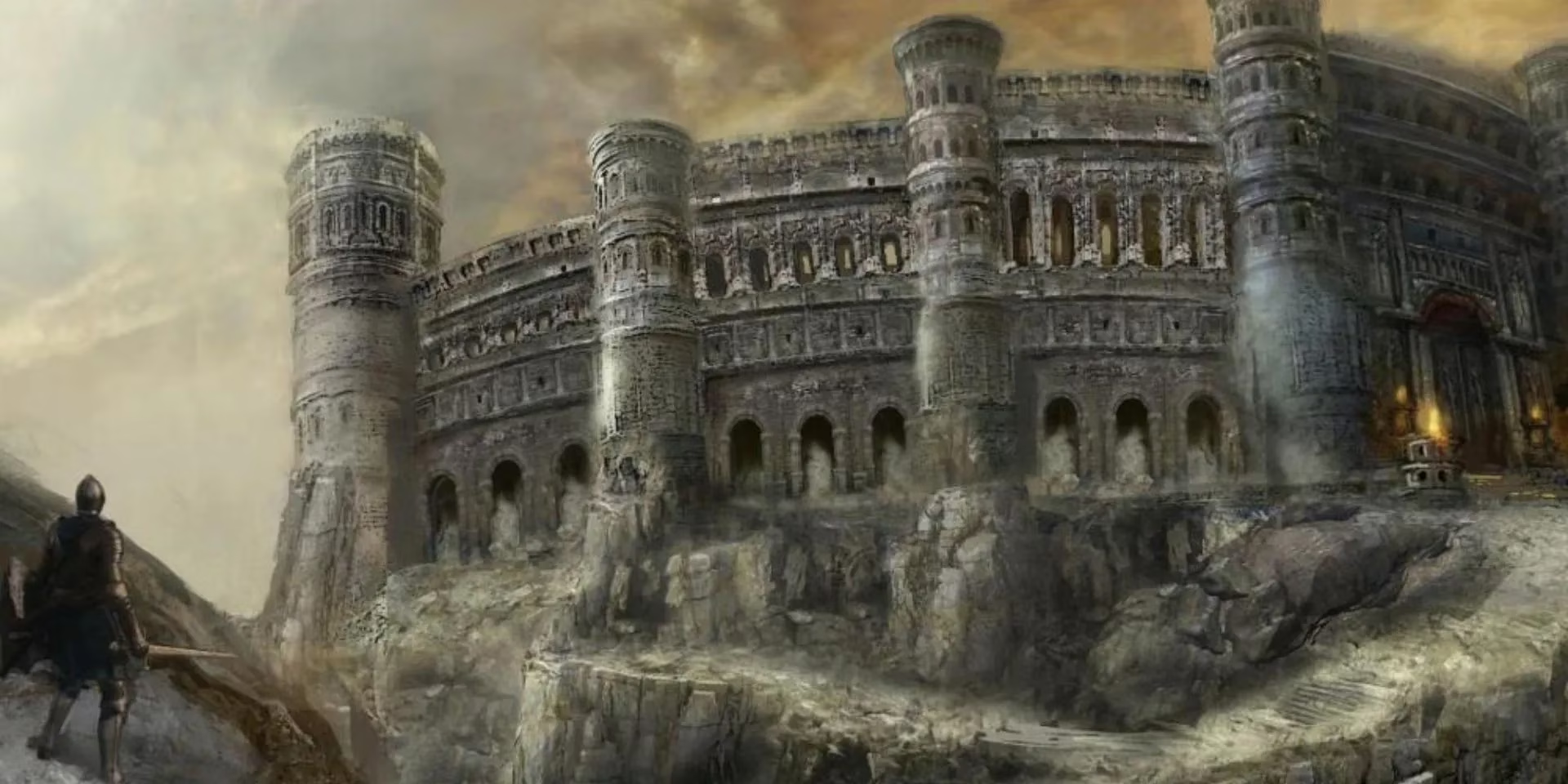
The three great Colosseums, scattered from the windswept cliffs of Stormhill to the blighted wastes of Caelid and the gilded capital of Leyndell, were not built for the Tarnished of today. Their architecture speaks of imperial grandeur, designed to glorify military might and honor the Erdtree through ritualized violence. Each arena now offers a distinct flavor of combat to modern challengers: the chaotic free-for-alls of Stormhill, the honorable one-on-one duels beneath Leyndell's golden boughs, and the spirit-infused warfare of Caelid. Yet, to understand why they fell silent, one must look to the items left behind by the gladiators of old.
Two key sets of artifacts tell the story. The Ritual Sword and Shield Talismans, patterned after ceremonial gear, carry a telling description: the practice of ritual combat held to honor the Erdtree had died out by the age of King Consort Radagon. Furthermore, the bronze Duelist Helm, modeled after Roman gladiator armor and decorated with countless snakes, reveals a darker purpose. It states the snake is viewed as a traitor to the Erdtree, and audiences delighted in seeing these bronze effigies "beaten and battered."
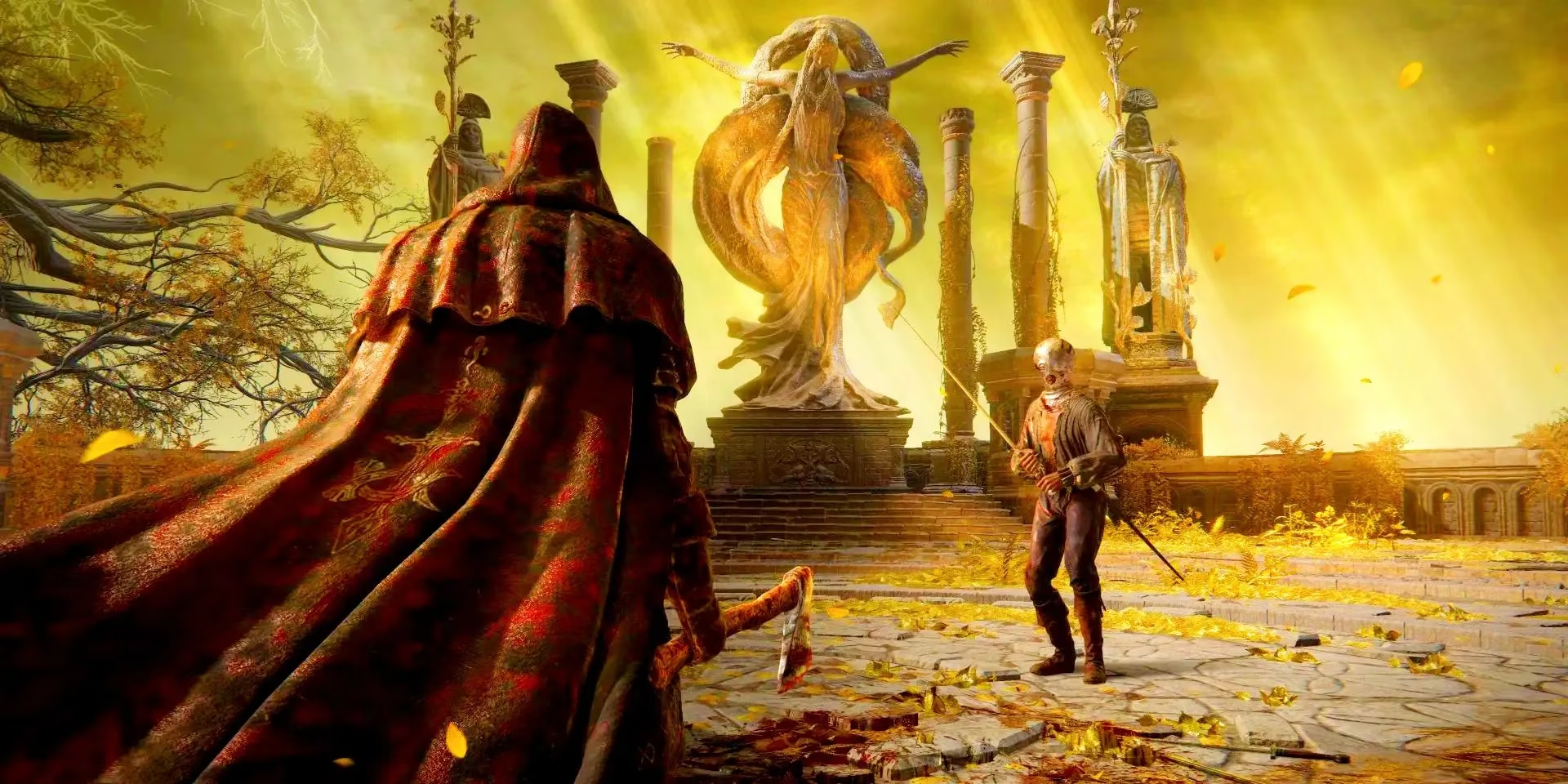
From these fragments, a clear history emerges. The Colosseums likely reached their zenith during the reign of Godfrey, the First Elden Lord. A fanatic for battle, whose very essence was war, Godfrey would have reveled in such spectacles. To entertain her battle-hungry consort, Queen Marika the Eternal may have commissioned these arenas. The combat served a dual purpose: to honor the Erdtree and to ritually demean its enemies. Just as Roman gladiators dressed as conquered foes, the snake-adorned gladiators in Elden Ring likely represented a specific traitor—possibly the God-Devouring Serpent of Mount Gelmir, a blasphemous entity that turned against the Golden Order.
However, an era defined by raw strength does not last forever. The cultural shift was profound. With Godfrey's exile, becoming Tarnished and leading his warriors away, the lord of battle departed. His successor, Radagon, was a different kind of ruler: a scholar of Golden Order Fundamentalism, adept in incantations and intellect. Under his reign, the values of the Lands Between shifted. Knowledge and doctrine began to outweigh sheer martial prowess. The simulated battles of the Colosseum, once a central pillar of culture, became obsolete—a relic of a cruder, bygone age. The arenas were shuttered, left to decay as the Golden Order turned inward.
This rich history begs the question: what future do these arenas hold? The current PvP modes—duels, team fights, and spirit summons—already mirror classic Roman games. But history shows that Roman spectacles grew ever more elaborate and exotic.
-
Mounted Combat Arenas: Imagine a Colosseum where Tarnished could summon their spectral steeds, creating a whole new meta centered around jousting and cavalry charges. Which weapons would reign supreme from horseback? The combat dynamics would be utterly transformed.
-
Naval Battle Simulations: There are tales of the Romans flooding the Colosseum for mock sea battles. A mode set on unstable, shifting boats would challenge players' footing and maneuverability, making every duel a precarious dance.
-
Chariot Duels: High-speed, vehicle-based combat could introduce a thrilling new layer of strategy and chaos to the arena.
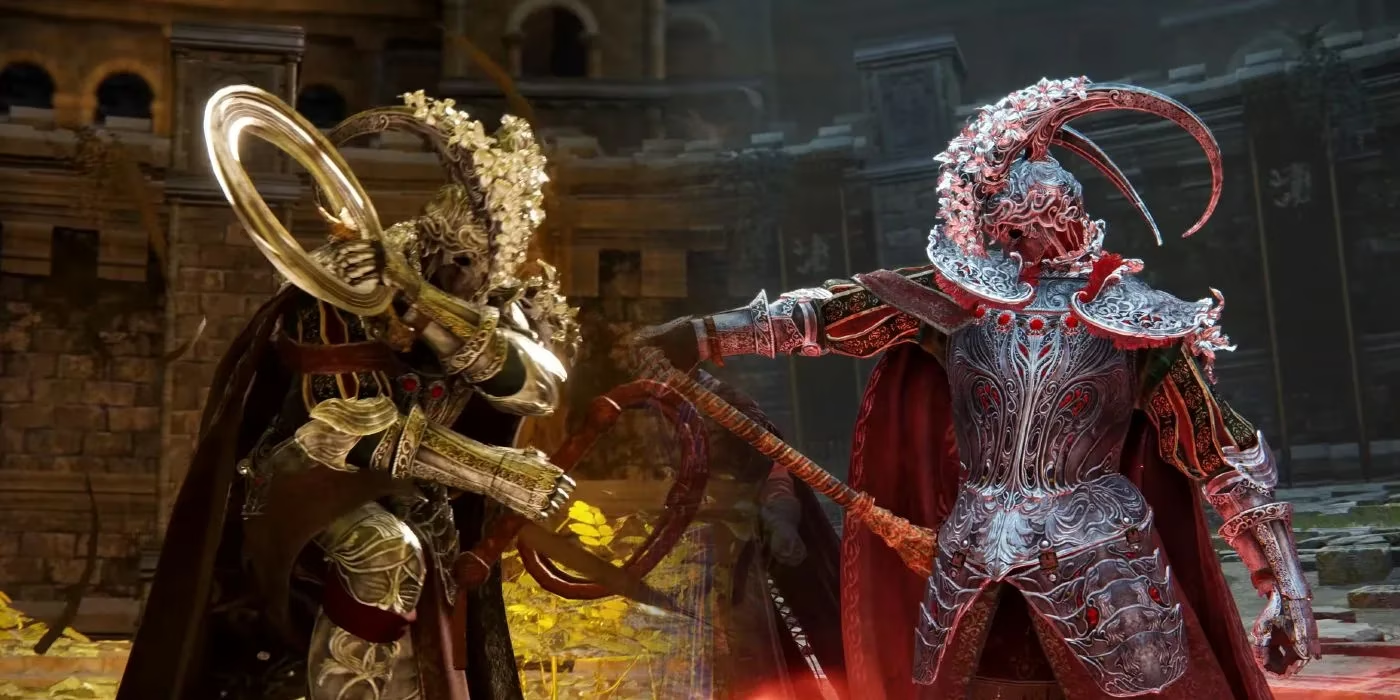
The abandoned Colosseums of Elden Ring are more than just PvP lobbies; they are monuments to a fallen age. They stand as stone testaments to the reign of Godfrey, a time when strength was celebrated in its most visceral form. Their silence echoes the philosophical shift brought by Radagon, where the pen (or the sacred seal) began to hold as much power as the sword. Now, in 2026, as Tarnished from across the realms clash within their rings once more, they are not just fighting for runes or glory. They are re-enacting the very rituals that defined an empire, in arenas that watched the first Elden Lord's era begin and end. The future may yet see these ancient stages host even grander, more bizarre spectacles, forever blurring the line between honoring history and creating it anew through relentless, glorious combat. 🔥⚔️🛡️