
I have a confession: I once spent 47 minutes deciding whether my Arisen’s cheekbones should look heroic or haunted. In 2026, I still believe the character creator is the true first boss of any RPG. It is a foyer to a house you haven’t built yet—I end up polishing the doorknob while the actual adventure waits outside. People love making characters because it’s dress-up with shapeshifting privileges: skin, hair, eyes, ears, nose, and sometimes even the exact slant of a jawline. The most addictive part is that hours vanish into sliders, even when some games later shove a full helmet over your masterpiece. Modern developers have learned to hide helmets during cutscenes, but the real magic is the moment before the world loads.
The Pioneers That Taught Me Patience 🎨
Put yourself back in the mid-2000s. Before The Elder Scrolls IV: Oblivion, many character creators felt like picking a face from a cereal box. Oblivion changed the vibe. It took the deep class and customization ideas from Morrowind and laid the groundwork for future Elder Scrolls creation screens. Yes, the graphics look old now, but for its time, Oblivion felt like being handed a 3D sculpting kit instead of a few sliders.
World of Warcraft is a different kind of monster. After more than twenty years, this MMO has grown into a customization department store with infinite dressing rooms. By the time I finish browsing dozens of races and 13 classes, I’ve usually forgotten which character I intended to play. Retail WoW’s creation screen is wildly deeper than it used to be. Some races, like Dracthyr or Earthen, have pages of options before I even enter the game, and that’s before the massive wardrobe of transmog and cosmetics waiting inside.
Depth That Hides Under Armor 🛡️
Dark Souls is one of the greatest games ever made, but its character creator is a cruel joke in the best way. It offers a surprisingly detailed creator, then wraps your work in armor and turns you into a hollow, zombie-like husk for about 80% of the game. Creating a beautiful face in Dark Souls feels like sculpting a marble bust and then immediately wrapping it in a burlap sack for the entire museum tour. You basically have to stay half-naked and spend rare Humanity just to see the face you designed.
Diablo 3 and Diablo 4 took a different path. Diablo 3 shocked players with how good its creator was for an action RPG, and Diablo 4 polished that same idea. You can make genuinely unique protagonists, and unlike Dark Souls, Diablo 4 shows your character’s face in many story cutscenes. The creator remains one of the best parts of the ARPG package, even while the game argues with its own community about other things.
Nioh 2 also deserves a nod. The first Nioh gave you a set protagonist, but Nioh 2 lets you build your own character while also demanding constant gear upgrades. The visual customization is strong, and the equipment system makes the whole journey feel like endless wardrobe experimentation.
Choices That Echo Through the Story 📖
Vampire: The Masquerade – Bloodlines is a fascinating case because it doesn’t give you a hundred nose sliders. Instead, the character creation is more like choosing a bloodstream: starter clan, background, and basic skills all ripple through the rest of the game. It may not have the fanciest face sculptor, but the choices carry real narrative weight.
Baldur’s Gate 3 is the modern benchmark. Larian Studios turned character creation into a full prelude. The appearance options are deep, but the build choices matter even more. A wrong stat spread can make early fights painful, while a wildly different class or background can make a whole new playthrough feel fresh. It’s the rare game where the creator is both a toy box and a strategy table.
GreedFall surprised a lot of people, including me. Spiders was known for heart and jank, but GreedFall’s creator let me spend ages shaping De Sardet in ways that made me care before the story even began. It filled a Mass Effect-shaped hole for many players and proved that Western RPGs can still make the pre-game mirror feel meaningful.
Pure Joy and Pawn Shenanigans 🐉
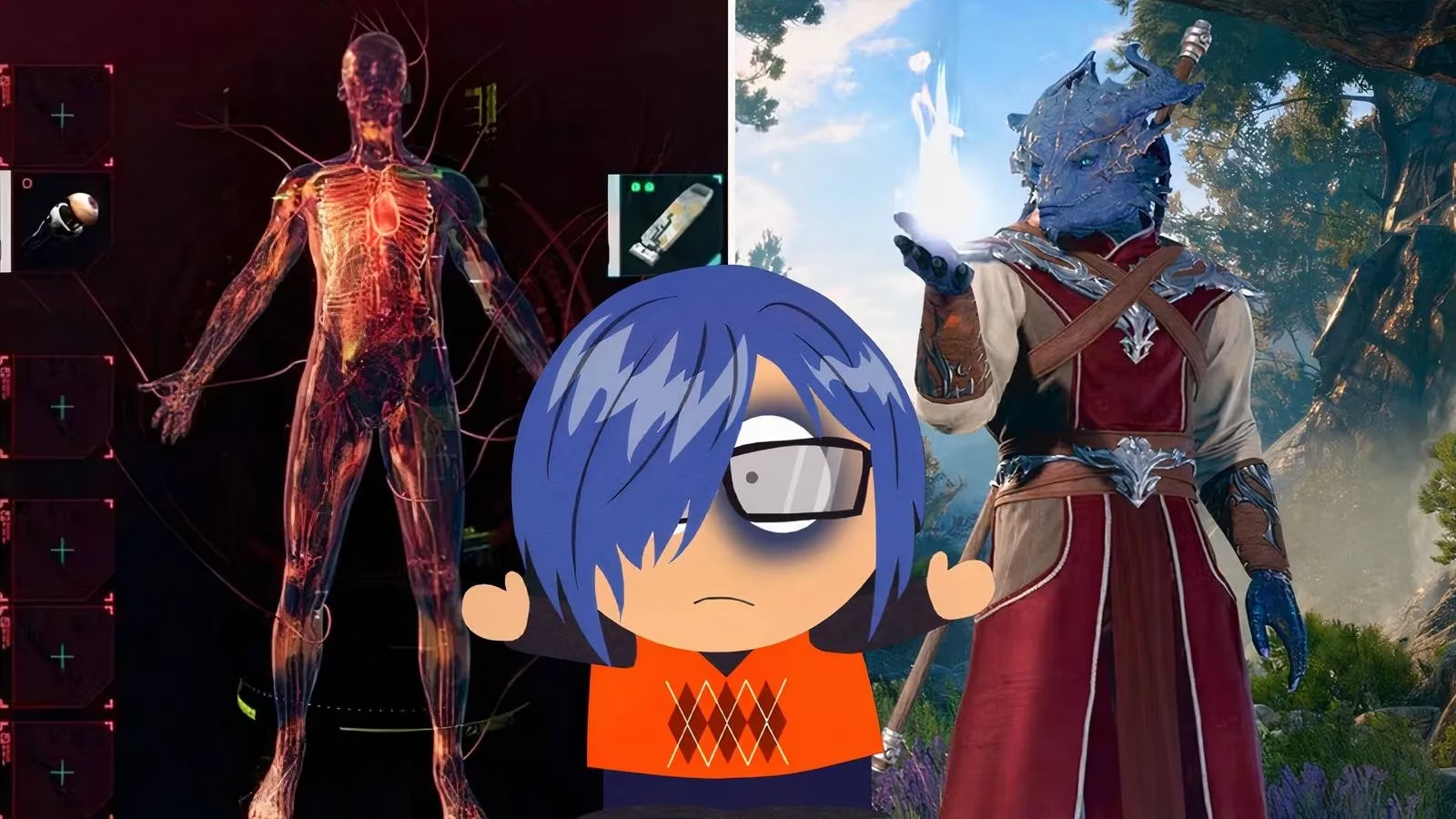
South Park: The Stick of Truth nailed something special. The art style plops you into South Park with almost no friction, and creating the New Kid feels natural rather than awkward. It’s not about tiny facial sliders; it’s about becoming a cartoon version of yourself before a ridiculous turn-based romp.
Dragon’s Dogma 2 had a rocky launch thanks to technical issues and monetization drama, but underneath that noise is one of the most impressive character engines I’ve used. The creator can generate realistic faces that respond beautifully to tweaks. Players have made everything from accurate celebrity recreations to nightmare fuel. The Pawn system adds another layer: your custom companion travels with you, and other players’ Pawns sometimes appear in your world. Running into someone’s Kratos or Arnold Schwarzenegger Pawn mid-campaign makes the world feel alive and weirdly personal.
| Game | Why the Creator Stuck With Me |
|---|---|
| Oblivion | Felt like a 3D sculpting kit in the mid-2000s |
| World of Warcraft | Endless race/class combos plus transmog rabbit hole |
| Dark Souls | Brilliant creator, tragically hidden by hollowing |
| Diablo 4 | Surprisingly strong ARPG customization with cutscene payoff |
| Nioh 2 | Build-your-own warrior plus endless gear upgrades |
| Bloodlines | Choices shape the story more than the face |
| Baldur’s Gate 3 | Deep builds make replays feel genuinely new |
| Dragon’s Dogma 2 | Realistic faces and Pawn crossover chaos |
| South Park: Stick of Truth | Effortlessly drops you inside the cartoon world |
At the end of the day, I still judge an RPG by how long I can sit in its character creator without feeling bored. Some games treat it like a necessary chore; the best ones treat it like a small private universe where I get to decide who walks through the door.