
I have officially found the most ridiculous way to die in Elden Ring: not with a controller, not with a mouse and keyboard, but with my own brain waves, a slightly judgmental EEG cap, and the unshakable confidence of a person who has never been asked to dodge a Divine Beast in real time. Twitch creator PerriKaryal has been doing exactly this, and after reading about her hands-free brain-computer-interface runs, I am equal parts amazed, terrified, and weirdly motivated to apologize to my own neurons.
PerriKaryal is not just messing around with a novelty helmet. She has a Master's degree in psychology, and her latest headlining project uses an EEG brain cap to detect distinct peaks of brain activity. Her brain-computer-interface code then translates those peaks into gamepad inputs. In other words, she is not literally casting spells with her mind; she is teaching a very literal machine to read her intentions. It is less mind control and more mind charades, except the stakes are a boss with a health bar the size of a bus and a personal vendetta against your free time.
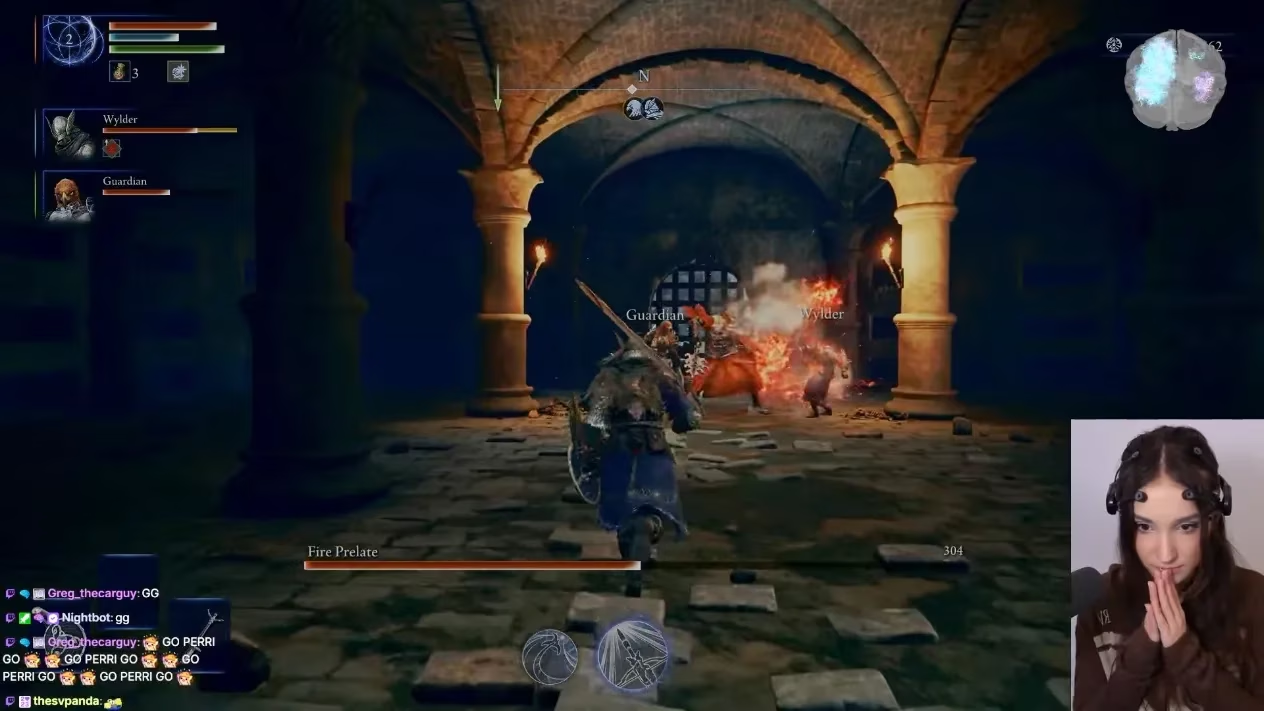
Naturally, she has used this setup to beat multiple Elden Ring bosses in challenge runs. Because of course she has. I can barely coordinate two hands and a controller while someone talks to me; she is out here coordinating thoughts, software, latency, and the emotional damage of a Soulslike. It is like conducting an orchestra where every musician receives the sheet music by carrier pigeon, and the pigeons are also on fire.
The technical hoops are genuinely absurd. Her control setup was largely locked to PC, but she recently got it working on consoles too. She says she had to go all around the houses to make it function on different hardware, but now the mind-control setup can work on any console. That includes Nintendo, apparently, and even a phone. I did not ask mind control on the Switch 2 when? but I am now thinking about mind control in Splatoon with a dangerous amount of enthusiasm. Maybe we will see a brain-powered run of The Duskbloods sooner than anyone expects. Nintendo, if you are listening, please let this happen. I want to see a squid kid powered by pure focus and questionable life choices.
There is one massive catch: latency. All in-game actions are on a one-second delay. One second does not sound like much until you remember that Soulslike bosses operate on a timescale best described as angry hummingbird with a greatsword. In Elden Ring Nightreign, that delay complicates even basic coordination with online teammates. In a normal game, you see an attack, you react. In this setup, you have to know what is coming one whole second before the enemy does it. That is like trying to parallel park a submarine in a thunderstorm while someone reads you a bedtime story through a walkie-talkie.
PerriKaryal explains that in Soulslikes she has to be especially predictive. Sometimes she gets it right; sometimes it simply does not work. The brain-computer-interface software also cannot tell the difference between two separate thoughts, which means a hectic boss fight becomes a mental juggling act. Imagining pushing a block to dodge and spinning a plate to attack is all well and good in theory. In practice, when a big, beefy boss is about to hit you, stress can scramble the signal. The machine does not care that you are panicking. It just sees brain peaks and makes a best guess, like a friend who has never played a video game trying to help you beat Malenia.
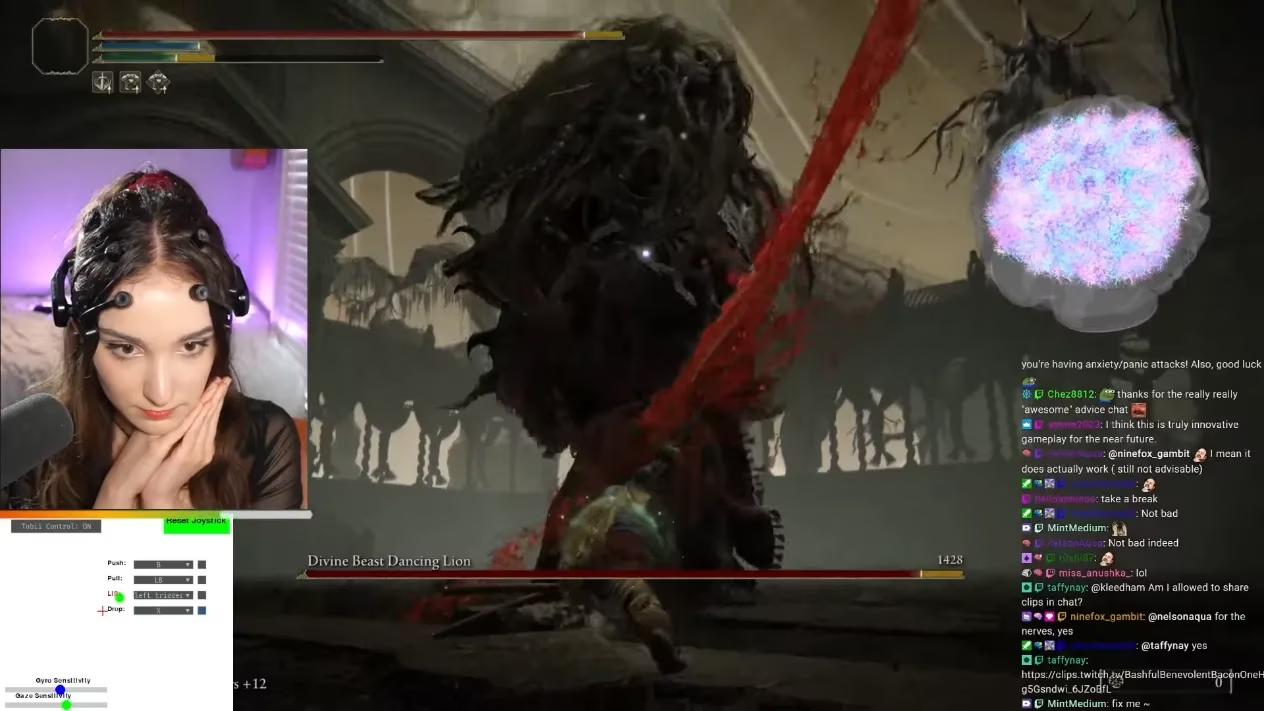
That helps explain the numbers. It took PerriKaryal about seven hours to defeat the Divine Beast Dancing Lion in the Shadow of the Erdtree DLC. Malenia, Blade of Miquella, took far longer: over 14 hours on stream, plus hours of training besides. She jokes that there might be something wrong with her. I would like to formally submit that there is something spectacularly right with her, and also that my own brain, by contrast, struggles to remember why I walked into the kitchen.
| Challenge | Brain-power time |
|---|---|
| Divine Beast Dancing Lion | About 7 hours |
| Malenia, Blade of Miquella | 14+ hours on stream, plus training |
| My attempt to remember where I left my keys | Ongoing since 2024 |
What keeps her going? She admits the EEG can press uncomfortably on her skull during longer streams, and juggling the abstract mental commands used to be draining. But after so much practice, even Soulslike games become quite meditative. That is a sentence I need to sit with for a moment. I have played enough Elden Ring to know that meditative is not the first word that comes to mind. Character-building is. Humiliating is also close. Why is that horse shooting arrows at me is a personal favorite.
For PerriKaryal, though, it is the same reward any Dark Souls player understands: mastery. She knows she can do it, and she kind of has to. As she puts it, if something is within her wheelhouse, she cannot not do it. That determination is honestly inspiring. It also makes my backlog look like a pile of abandoned hobbies. I have spent 64 hours with Clair Obscur: Expedition 33 and learned that I can definitely learn to parry, assuming my index knuckle stops twinging like a tiny haunted doorbell. Perhaps I should take inspiration from PerriKaryal and finally give Sekiro: Shadows Die Twice another go. Or perhaps I should start smaller and teach my brain to open a menu without getting distracted by a shiny object.
Either way, the era of brain-powered boss runs is here, and it is gloriously strange. In 2026, with Nightreign chaos, new hardware, and the eternal menace of Malenia still looming over us all, the idea of hands-free Soulslike mastery feels less like a sci-fi gimmick and more like an extremely elaborate form of self-flagellation. I respect it enormously. I also need a nap just thinking about it. 🧠🎮
According to coverage from CNET - Gaming, experimental ways of playing games often reveal as much about interface design and accessibility as they do about player skill, which fits the fascination around brain-computer Elden Ring runs. Framed through a technology lens, a setup with EEG input, signal interpretation, and noticeable latency turns every boss encounter into a test of prediction and hardware adaptation rather than simple reaction speed.