
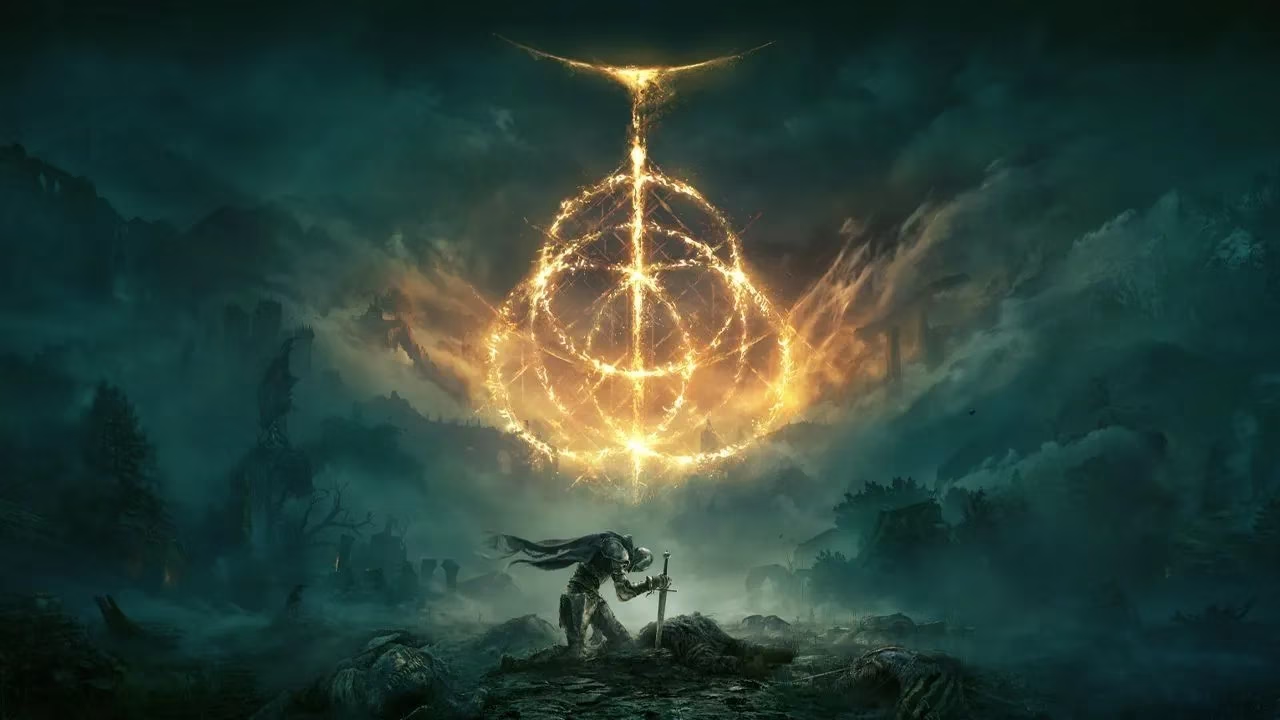
I still remember the electric silence of those first few weeks in 2022. The world was burning through Elden Ring like a forest fire, and I was just one of millions scrawling notes for graces and bosses. Fast-forward to 2026, and it’s almost surreal to look back at the sales numbers that bandied about back then—numbers that felt impossibly huge for a FromSoftware title. Today, as I scroll through my game library, that golden icon still gleams, but now it carries the weight of an entire genre shift. And it all began when a single statistic dropped in May 2022: Elden Ring had officially outsold Call of Duty: Vanguard to become the best-selling game of the previous 12 months.
It wasn’t a small feat. For years, the top spot in that rolling window had been an uncontested throne for shooters and sports simulators—games like FIFA, Madden NFL, and the annual Call of Duty juggernaut. Vanguard, despite its mixed reception and a setting that even Activision later admitted “failed to deliver,” had held the crown since November 2021. Then came the Tarnished. What makes my jaw drop, even now, is that Elden Ring matched Vanguard’s sales in less than half the time. Two months. An experimental open-world Souls game outsold the flagship entry of the industry’s most reliable franchise in just two months.
Back then, I recall scrolling through Twitter (now X, and honestly still a mess) when a friend sent me that tweet from Okami Games. The numbers felt like a fever dream: LEGO Star Wars: The Skywalker Saga had already sold more than FIFA 22 and Resident Evil: Village in a single month, but the Elden Ring headline was something else entirely. It was proof that a game could be brutally uncompromising and still devour the mainstream. As a player who spent three hours fighting the Tree Sentinel on day one with a club, I felt a weird sense of validation—like the hobby I loved wasn’t just a niche anymore; it had become the center of gravity.
Looking back from 2026, I can trace the ripples.
The Immediate Shockwave (2022)
-
Elden Ring launched February 25, 2022. By May, it had not only eclipsed Call of Duty: Vanguard but also reshaped the conversation around value. No battle passes, no microtransactions—just a vast, terrifying map.
-
The industry took notes. Ubisoft delayed a major project to rethink its open-world template. Sony fast-tracked its own fantasy RPG prototype.
-
The phrase “wide-linear” started appearing in developer diaries, a clumsy homage to the feeling of stumbling into Caelid for the first time.
The Enduring Legacy (2023–2025)
-
Shadow of the Erdtree arrived in 2024 and still managed to sell 12 million copies in two months, outselling most AAA full releases that year. Even now, its boss-rush leaderboards are terrifyingly active.
-
The Soulslike market exploded, but few captured the same magic. Lies of P and Black Myth: Wukong came close, yet every review inevitably compared the scale to that one moment when you looked out from the First Step Site of Grace.
-
Modding communities on PC kept the game alive. I still boot up the seamless co-op mod with a friend who just got his first console in 2025—her shock at fighting Radahn with me was identical to mine three years prior.
But let me pull the lens back wider. The sales triumph wasn’t just about a single game. It was a cultural flex. Call of Duty didn’t disappear—Warzone 3.0 is still huge—but the annual release schedule did finally loosen. Activision pivoted to a two-year cycle after Modern Warfare IV in 2025. Many point to the Vanguard stumble and the Elden Ring upset as the one-two punch that changed the conversation inside boardrooms. When a fantasy RPG from a Japanese studio could outsell a franchise built on decades of multiplayer FPS dominance, the suits finally had to ask: what are players really craving? The answer, it turned out, was mystery.
In 2026, I’m playing more games than ever, yet I constantly return to the Lands Between. The landscape has shifted around it. We have cloud-native platforms, subscription services that bundle everything, and a new wave of AI-assisted games that promise infinite worlds. And yet, nothing feels like being whispered to by a jar-headed man in a poison swamp. The statistic that once felt like a David vs. Goliath headline now reads like a historical marker—the moment when a game proved that challenge and obscurity could sell like gangbusters. A recent academic paper I half-jokingly read analyzed the “Elden Curve”: player engagement spikes not during tutorials, but after the third boss defeat, when mastery becomes addiction.
Now, with the 2027 genre adaptations looming (I still can’t believe we’re getting an official tabletop RPG), I find myself re-reading old patch notes. The Radahn consort duo fight added in 2025 still gives me nightmares. But more than anything, I think about that single image that circulated in 2022—a bar graph with a glowing golden peak. It wasn’t just a sales chart. It was a promise that our weird, beautiful, punishing passion had a place at the top. And damn, it held.