
The spring of 2026 arrived, and with it a piece of news that made me almost drop my controller. George R.R. Martin, the legendary creator of the A Song of Ice and Fire saga, casually mentioned during a podcast that he had finally, actually, played Elden Ring. For nearly four years, I had known the story: the man who helped build the Lands Between had never set foot there himself. Now, at last, the author who gave names and tragic histories to demigods like Malenia and Radahn had wandered the foggy Limgrave plateau and endured the game’s brutal embrace. I smiled, remembering my own first steps in 2022, and suddenly the circle felt complete.
Back in 2022, the internet buzzed with a strange revelation. Martin appeared on The Late Show With Stephen Colbert and told the audience that despite his deep involvement, he had not yet played the FromSoftware masterpiece. His reason was both relatable and heartbreaking for the millions waiting for The Winds of Winter. He explained that he has an addictive personality — when he finds something captivating, it consumes him entirely. In the past, he had lost weeks, even months, to strategy classics. To finish the long-delayed sixth A Song of Ice and Fire novel, he had quit gaming “cold turkey.” At the time, I remember thinking, “A man who writes about dragons and betrayal can’t afford to fall into the Lands Between — the Lands Between would swallow him whole.”
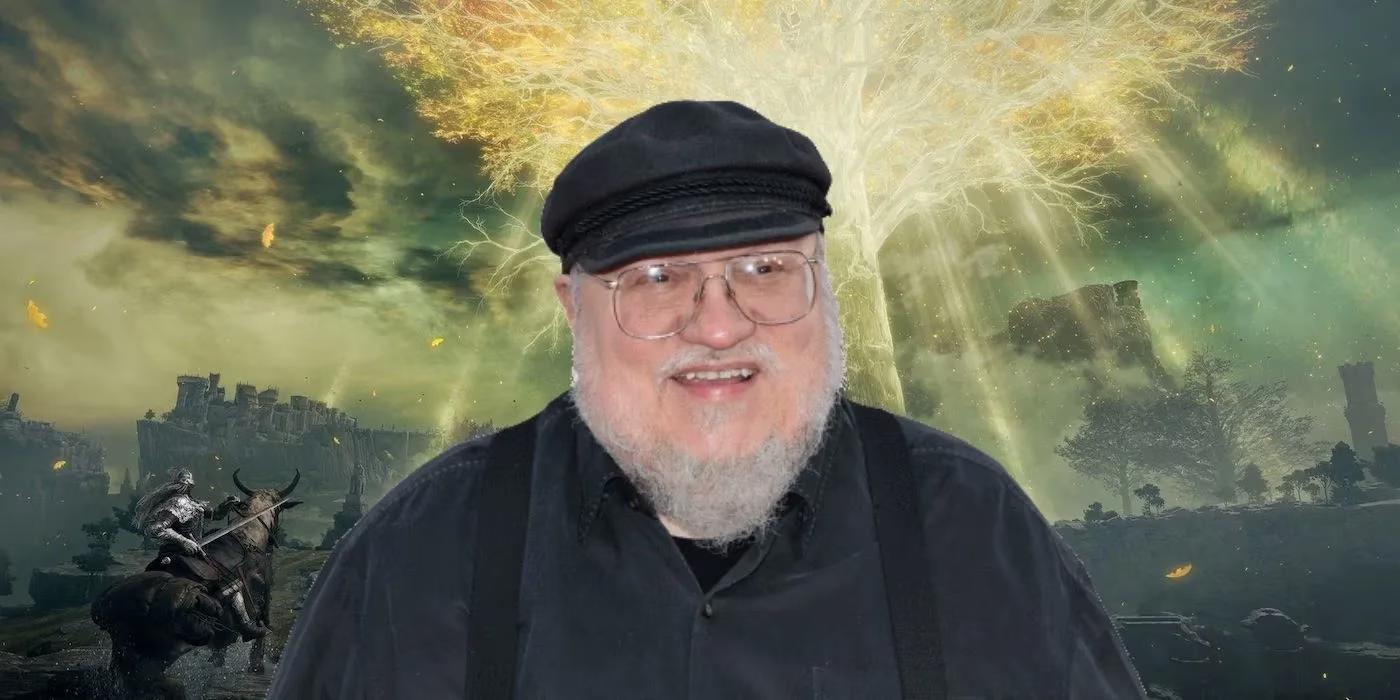
That interview revealed a side of Martin’s gaming history that felt almost nostalgic. He didn’t name modern blockbusters. Instead, he spoke of Railroad Tycoon, Master of Orion, and Homeworld. Those titles paint a picture of a man who loved sprawling systems, slow-building empires, and tactical depth. I could easily imagine him staring at a star map for hours, optimizing trade routes or launching carrier fleets. Those games demand patience and planning — qualities that also define his writing. But Elden Ring is a different beast. No amount of strategic foresight saves you when Malenia ascends for the Waterfowl Dance. I often wondered how a man who last held a controller in the age of floppy disks would cope with a boss that has killed me more times than I care to admit.
The years rolled on. The Winds of Winter remained unfinished throughout 2023 and 2024, though Martin shared glimpses of progress. He was, in his own words, “three quarters of the way done,” and the book was set to be the longest in the series. Every update felt like watching a health bar regenerate. Then, in late 2025, the novel finally entered the world — and it was massive. Once the dust settled and the book signings ended, Martin apparently walked into a gaming store, bought a console, and downloaded Elden Ring. In that podcast from early 2026, he recounted his first few hours with a mix of delight and bewilderment.
He chose the Samurai class because, he said, “I always liked swords, and I figured a decent bow couldn’t hurt.” Then he met the Tree Sentinel. “That golden giant knocked me off my horse five or six times before I understood I wasn’t supposed to fight him yet,” Martin laughed, his voice crackling through my headphones. I leaned back in my chair, because I had been exactly that foolish. The Tree Sentinel is the first lesson Elden Ring teaches: you are small, and you must learn to run. Martin said it took him a whole weekend to accept that idea. A weekend! For a man who crafts labyrinthine plots, the concept of walking away from a shiny enemy was apparently a bitter pill. I remembered my own rage and eventual acceptance, and it felt like we were now brothers in suffering.
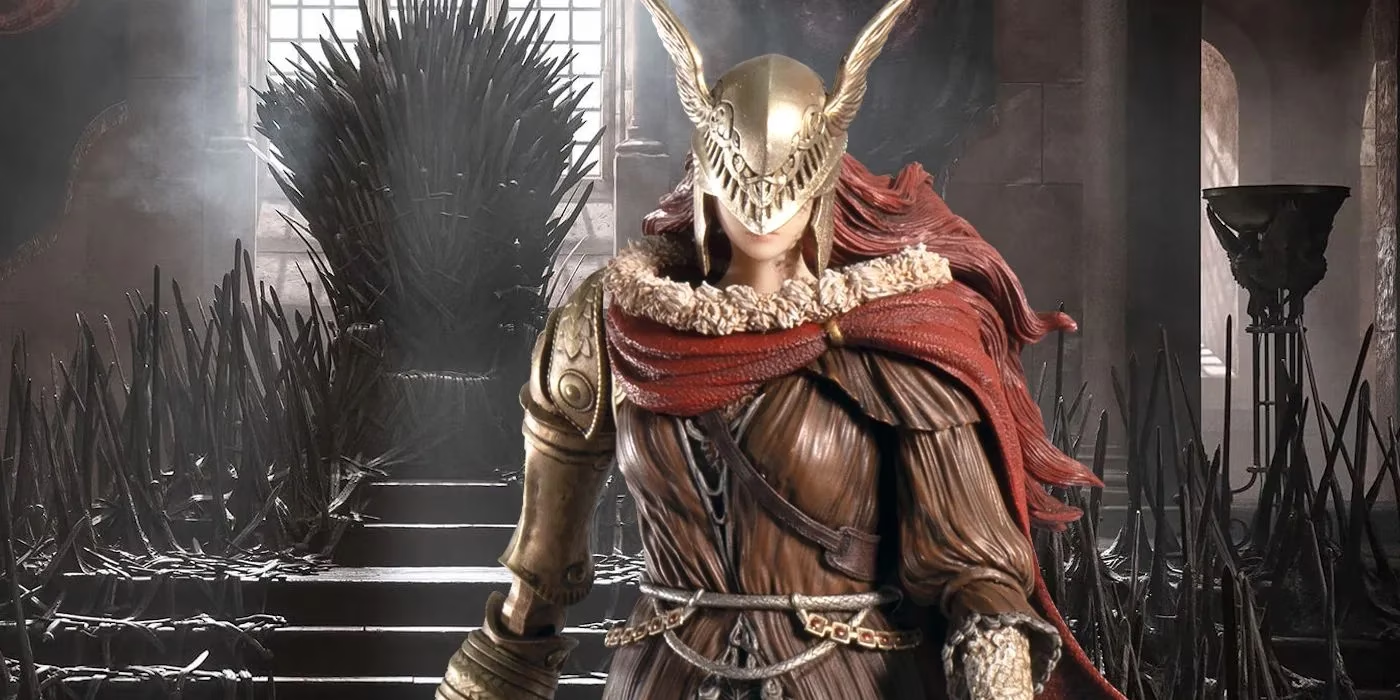
What struck me most was Martin’s reaction to the demigods he had created. He spoke of entering Caelid and seeing Radahn’s festival, the ruined landscape mirroring the mad general’s decay. “I wrote that Radahn was a fierce warrior who idolized Godfrey,” Martin said, “and then the team at FromSoftware turned him into this tragic figure holding the stars at bay. My words became their nightmare, and their nightmare gave me new ideas.” He even hinted that some elements from the Lands Between influenced the final chapters of The Winds of Winter, a sort of feedback loop that only decades-spanning art can produce. Malenia, the Blade of Miquella, received special praise — Martin said her story of rot and perseverance felt like something he might have written, but the visual design and boss fight made it “infinitely more terrifying and beautiful than I ever imagined.”
As the weeks passed, I kept tabs on hypothetical Martin playthroughs. He confessed that he was still nowhere near the end, maybe sixty hours in, exploring every nook and cranny. “I’ve developed a fondness for smithing stones,” he joked. “If A Dream of Spring is delayed, blame the bell bearings.” That made me chuckle. I thought about the community, the endless Reddit threads and YouTube guides, and how an author in his late seventies was now part of that same cycle of death and discovery. It was never just a game; it was a shared myth, and now one of its architects was walking among us, dying to the same imps and pages and runebears.
As a plain old Tarnished, I felt a renewed gratitude. The Lands Between existed because Martin lent his imagination to Hidetaka Miyazaki’s vision. For so long, that contribution felt like an echo — we played through his mythmaking, but he never experienced it. Now, in 2026, the gap had closed. The man who gave us the Red Wedding had finally met his match: Margit, the Fell Omen. I like to picture him scribbling notes about boss patterns on a legal pad, the same one he might use for character deaths. Maybe, just maybe, his latest play session will birth a twist so brutal that it only could have been forged in the fires of Caelid. Tonight, I’ll start a new character and name him George. I’ll ride without a shield, as all true warriors should, and I’ll remember that even the greatest storytellers must sometimes fall to a Grafted Scion. After all, every world needs its authors to suffer a little.