
The world of Elden Ring, even years after its initial release, continues to unravel its hidden layers and developer secrets. A long-standing puzzle that had captivated the community for months involved a set of mysterious swords discovered deep within the game's data files. Dataminers had uncovered icons for three distinct blades: one notably encased in a stone sheath and two others, unsheathed, boasting intricate and unique designs. For a considerable time, the consensus among dedicated players was that these weapons represented intriguing cut content, remnants of a quest or system that never made the final version of the game. The search for these phantom armaments in the live world of The Lands Between proved fruitless, leading many to file them away as fascinating 'what-ifs' in FromSoftware's development process.
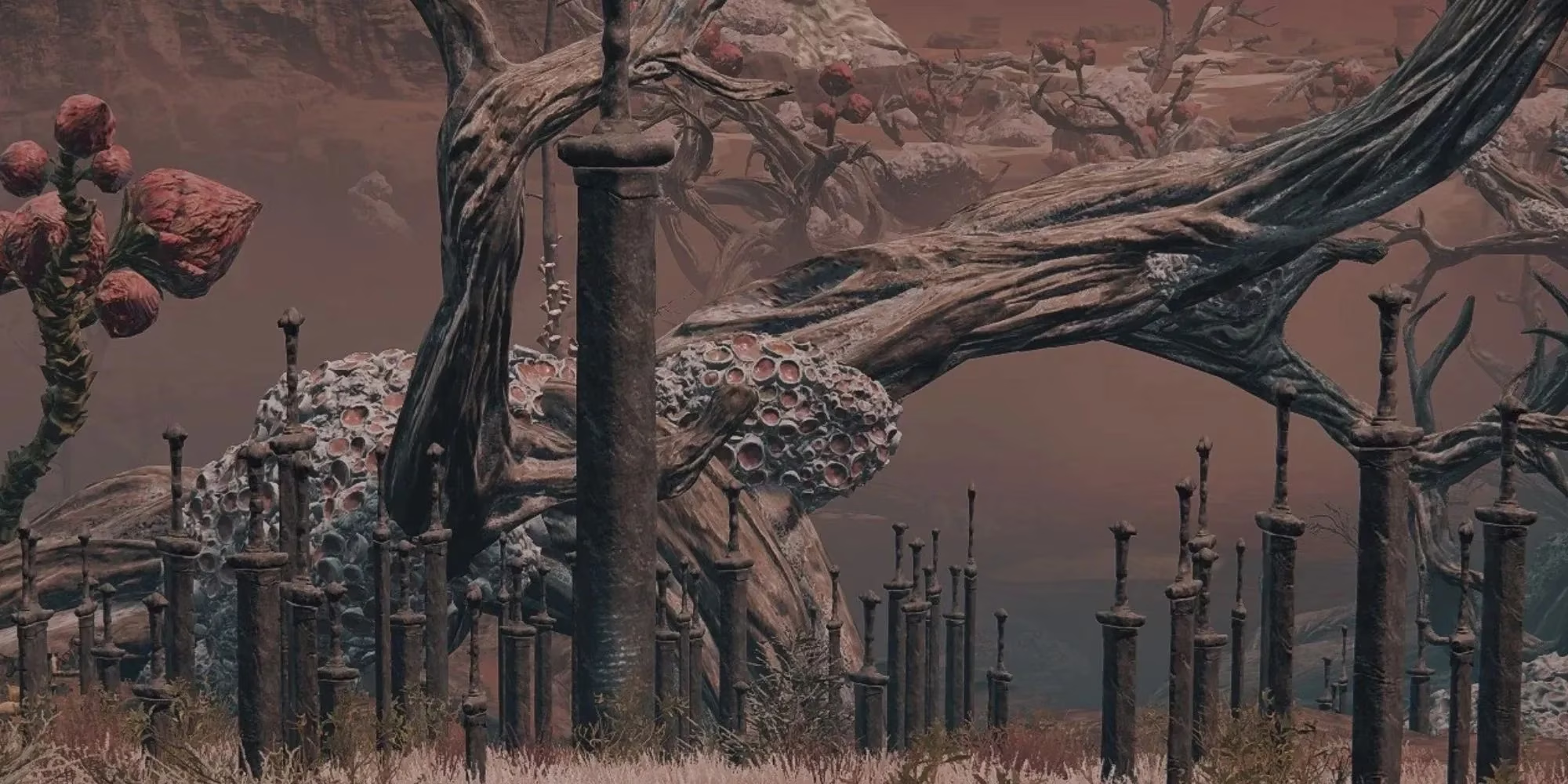
However, in a twist that exemplifies the game's dense and interconnected design, the mystery of the stone-sheathed sword has finally been solved. The breakthrough came not from a new patch or hidden dungeon, but from a simple act of recognition. Observant players, led by discoveries shared online, realized the truth: the elusive sword had been in plain view all along. It wasn't a weapon to be wielded by the Tarnished, but rather a key environmental asset. The sword encased in stone is identical to the numerous blades embedded in the earth across the game's many Stone Graveyards. These haunting fields of silent blades, often seen as homages to the manga Berserk, are a recurring visual motif in the open world.
This revelation provides a fascinating glimpse into FromSoftware's creative recycling. Instead of discarding the asset entirely, the developers cleverly repurposed it to build atmosphere and lore through environmental storytelling. The stone swords, once potentially a player's weapon, became permanent monuments to fallen warriors, contributing to the melancholic and history-laden tone of The Lands Between. This practice is not uncommon in game development, but finding such a clear-cut example satisfies a particular curiosity about how content evolves during a project's lifecycle.
🔍 The Fate of the Other Swords & The Lost Quest
The discovery, however, only solves one part of the puzzle. The two other beautifully designed swords from the datamined icons remain missing in action. The prevailing theory, bolstered by the shared intricate hilt designs among all three icons, suggests they were intended to be craftable variants. The stone-sheathed sword likely would have served as a base weapon in a longer, more complex questline where the player could choose its ultimate form, forging it into one of the two unsheathed designs. This points to a potentially scrapped system involving weapon customization or branching narrative rewards, a tantalizing piece of Elden Ring's developmental history that players will never fully experience.
-
Stone-Sheathed Sword: Repurposed as environmental art in Stone Graveyards.
-
Intricate Sword A: Presumably a craftable upgrade path, now cut content.
-
Intricate Sword B: The second potential upgrade path, also lost to development.
This case is a potent reminder of just how secret-filled Elden Ring truly is. If an object scrutinized by dataminers was openly displayed in the world with a completely different purpose, it begs the question: what other ordinary-seeming items or locations are actually repurposed fragments of abandoned ideas? The game encourages a perspective of deep scrutiny, where every texture and model could hold a hidden story.
This penchant for hidden, often unsettling lore extends far beyond cut content and into the very creatures that inhabit the world. Take, for instance, the game's Giant Land Octopuses. To most players, they are simply another monstrous obstacle. Yet, a dive into the item descriptions reveals a deeply horrifying truth. The Land Octopus Ovary item text discloses that these creatures require human consumption to reproduce. The horror is compounded by the Octopus Helmet, whose description notes it retains a "lingering warmth reminiscent of human skin." These snippets transform the enemies from mere beasts into visceral elements of a nightmare ecosystem, showcasing how Elden Ring layers its darkest lore in optional, easily missed details.
The solved sword mystery and the octopus lore are two sides of the same coin. They demonstrate the multiple depths at which the game operates:
-
The Meta-Narrative: The story of the game's own development, where assets find new life.
-
The Environmental Narrative: The story told by the world itself, through graveyards and landscapes.
-
The Item Lore Narrative: The horrific stories buried in menu text, waiting to be read.
As of 2026, years after its release, Elden Ring continues to be dissected and discussed. Discoveries like these are no longer about finding overpowered late-game weapons, but about piecing together the artistic and technical process that built one of the generation's defining worlds. It confirms that in The Lands Between, the line between a discarded idea and a foundational piece of scenery is beautifully, and intentionally, blurred. The next obvious rock formation or strange trinket in your inventory might just be the key to understanding another forgotten thread of the game's vast tapestry.