
When Elden Ring took the gaming world by storm in early 2022, its breathtaking open world, punishing difficulty, and melancholic lore captured the imaginations of millions. For manga and comic devotees who had already spent countless hours wandering the Lands Between, the announcement of an official manga adaptation felt like a gift. Yet the version delivered by artist Nikiichi Tobita was not the grimdark epic many had envisioned. Instead, Elden Ring: The Road to Erdtree arrived as a laugh‑out‑loud farce, and four years later in 2026 the series continues to divide opinion while carving out its own cult following.
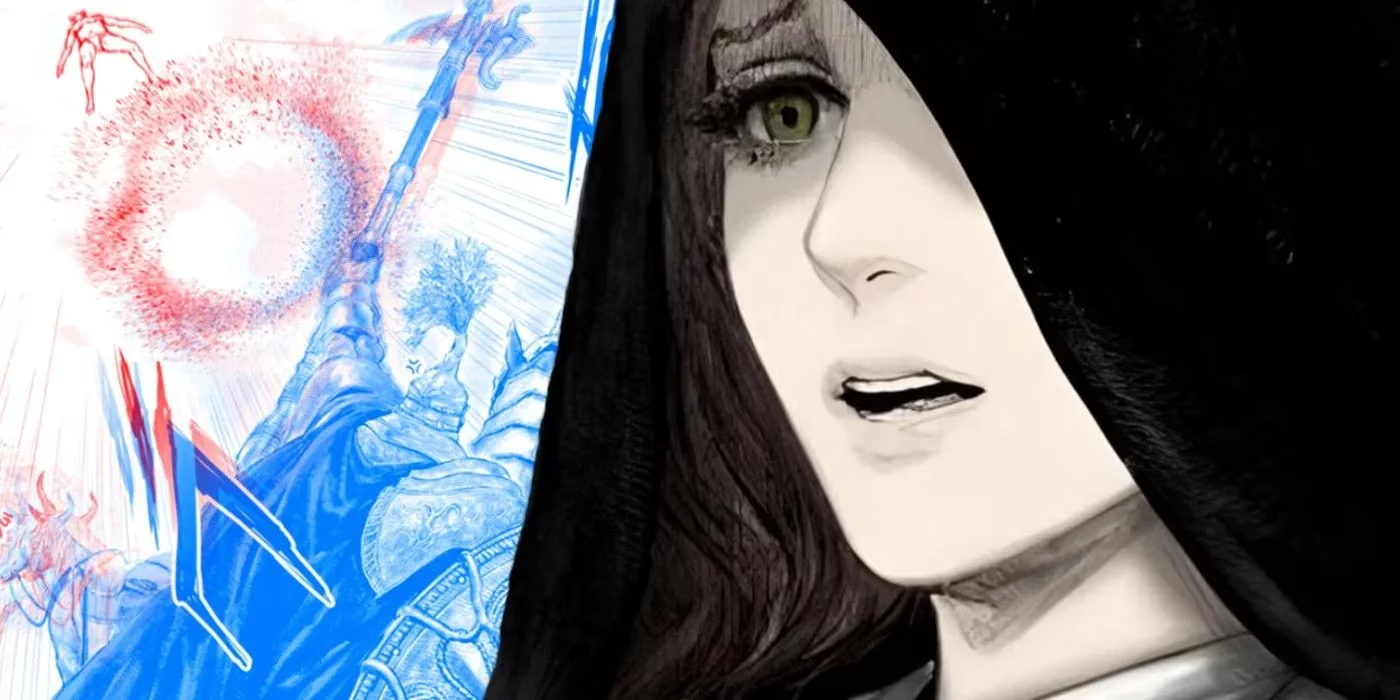
FromSoftware’s masterpiece casts players as a Tarnished – an outcast once banished from grace who is called back to save a fractured world. The journey demands constant resurrections after humiliating deaths, careful study of cryptic item descriptions, and an iron will to overcome towering foes. It is a somber, beautiful descent into decay. Logically, one might expect a manga to mirror that tone, diving into the profound backstories of demigods and the shattered Elden Ring. Tobita, however, looked at the same source material and saw a different truth: the game is also an endless parade of spectacular failures, and every player has a story of being flattened by a horse‑riding knight within minutes of starting.
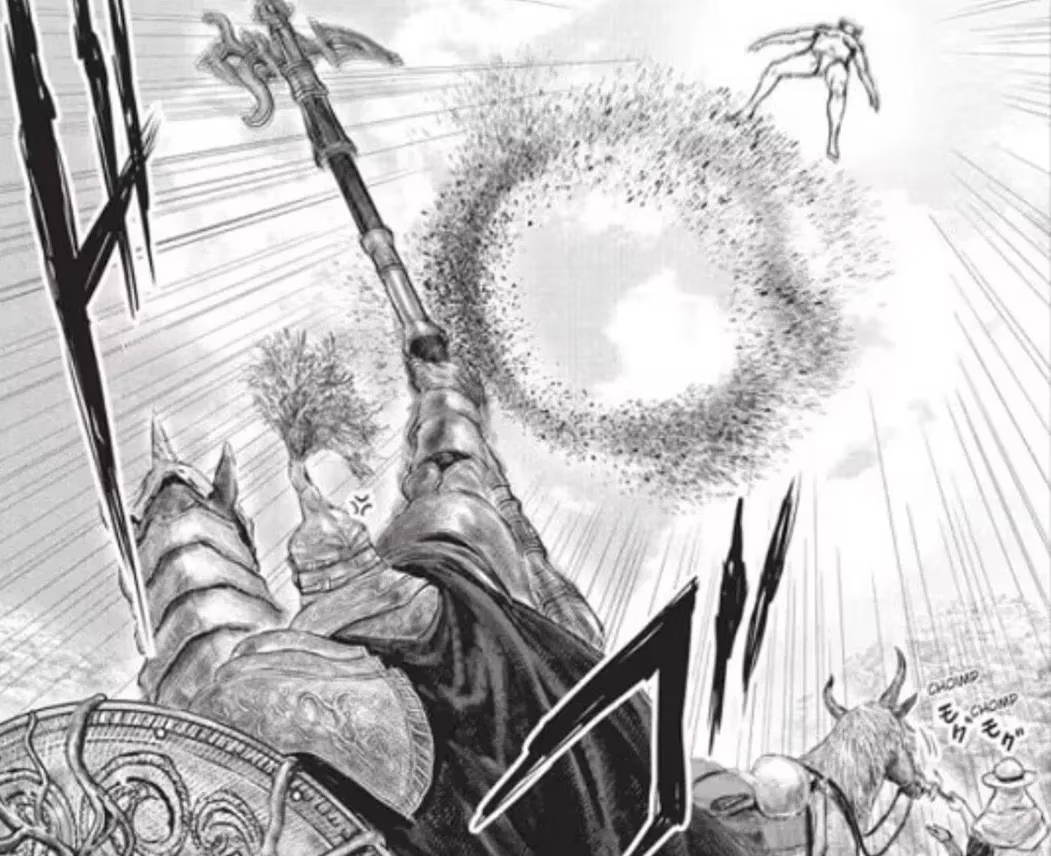
At the heart of The Road to Erdtree is Aseo, a Tarnished who is anything but a valiant champion. He is bumbling, cowardly, and armed with a spectacular streak of dumb luck. Where the game’s avatar can eventually evolve into a majestic lord, Aseo stumbles through the Lands Between in a state of perpetual panic. Tobita leans into slapstick humor with every page: the iconic first Tree Sentinel becomes a recurring nightmare, flasks of Crimson Tears are treated like baffling artifacts, and important encounters dissolve into chaotic screwball set‑pieces. This is not a mistranslation of the game; it is a deliberate parody that understands the humbling rhythm of a FromSoft adventure better than most serious adaptations could.
The tonal shock triggered a loud outcry from portions of the Elden Ring faithful. Some felt that turning the Tarnished into a figure of ridicule cheapened the epic stakes they cherished. Others, however, realized that the manga was holding up a funhouse mirror to their own gameplay memories. Who has not died twenty times to Margit the Fell Omen, only to finally win because the boss inexplicably glitched off a cliff? Who has not desperately scrolled through their inventory, accidentally wasting a precious Flask of Wondrous Physick while a giant crab snapped at their heels? Tobita’s version does not mock the game’s lore; it lovingly lampoons the player’s journey – a messy collision of poor reflexes, misunderstood mechanics, and the occasional miracle.
Perhaps the most clever element of The Road to Erdtree is its self‑awareness. The very first issue opened with a bold disclaimer: “THIS IS A COMEDY MANGA.” Tobita clearly anticipated the backlash and chose to embrace it. By 2026, the series has expanded well beyond those early chapters. Aseo has gained a rag‑tag party of equally hapless allies – an over‑serious Melina who deadpans through every absurdity, a narcissistic Blaidd who behaves more like a moody sitcom roommate than a loyal half‑wolf, and even a Merchant whose cryptic hints only ever lead to more humiliation. The manga has evolved into a serialized love letter to the shared suffering of the Soulsborne community, managing to be both a critique and a celebration of the very concept of “gitting gud.”
What keeps the manga relevant in 2026 is how it complements the now‑expanded Elden Ring universe. The massive Shadow of the Erdtree expansion released in 2024 brought new nightmares and fresh memes, and Tobita’s ongoing chapters have successfully incorporated that content with the same irreverent tone. The duel against Messmer’s incineration‑happy knights becomes a comedy of errors where Aseo tries to use torrential rain as a shield. Every addition reinforces the central joke: no matter how mythic the world’s design, the player is always one mis‑input away from a hilarious disaster. Fans who once condemned the manga have even started to warm to it, treating each new volume as a cathartic recap of their own blunders.
Of course, The Road to Erdtree will never replace the atmospheric grandeur of the game itself. It is not designed to. Instead, it exists as a parallel track – a comedic retelling that captures the bewildering experience of being dropped into a hostile open world with no manual, no mercy, and very little skill. Every undignified death and every accidental victory becomes a panel worth grinning at. Four years on, Aseo’s journey reminds the Elden Ring community that sometimes the most authentic tribute to a hardcore masterpiece is to point at it and laugh until you cry. For those willing to embrace the joke, the manga delivers exactly what it promised: chaos, charm, and the pure slapstick essence of a Tarnished who really should have stayed in the Chapel of Anticipation.