
The echoes of the Elden Ring: Nightreign network test have finally faded, leaving players in 2026 with one undeniable, earth-shattering truth: party balance isn't just a suggestion; it's the single, non-negotiable law of survival. Forget mastering your character's ultimate arts or memorizing enemy patterns—if your team isn't a perfectly synchronized unit, you are already dead. The game's brutal, rain-swept world of Limveld isn't just challenging; it's a meticulously crafted social experiment designed to expose every flaw in your cooperative strategy. Could this intense focus on multiplayer harmony be the game's greatest innovation, or its most punishing design flaw?
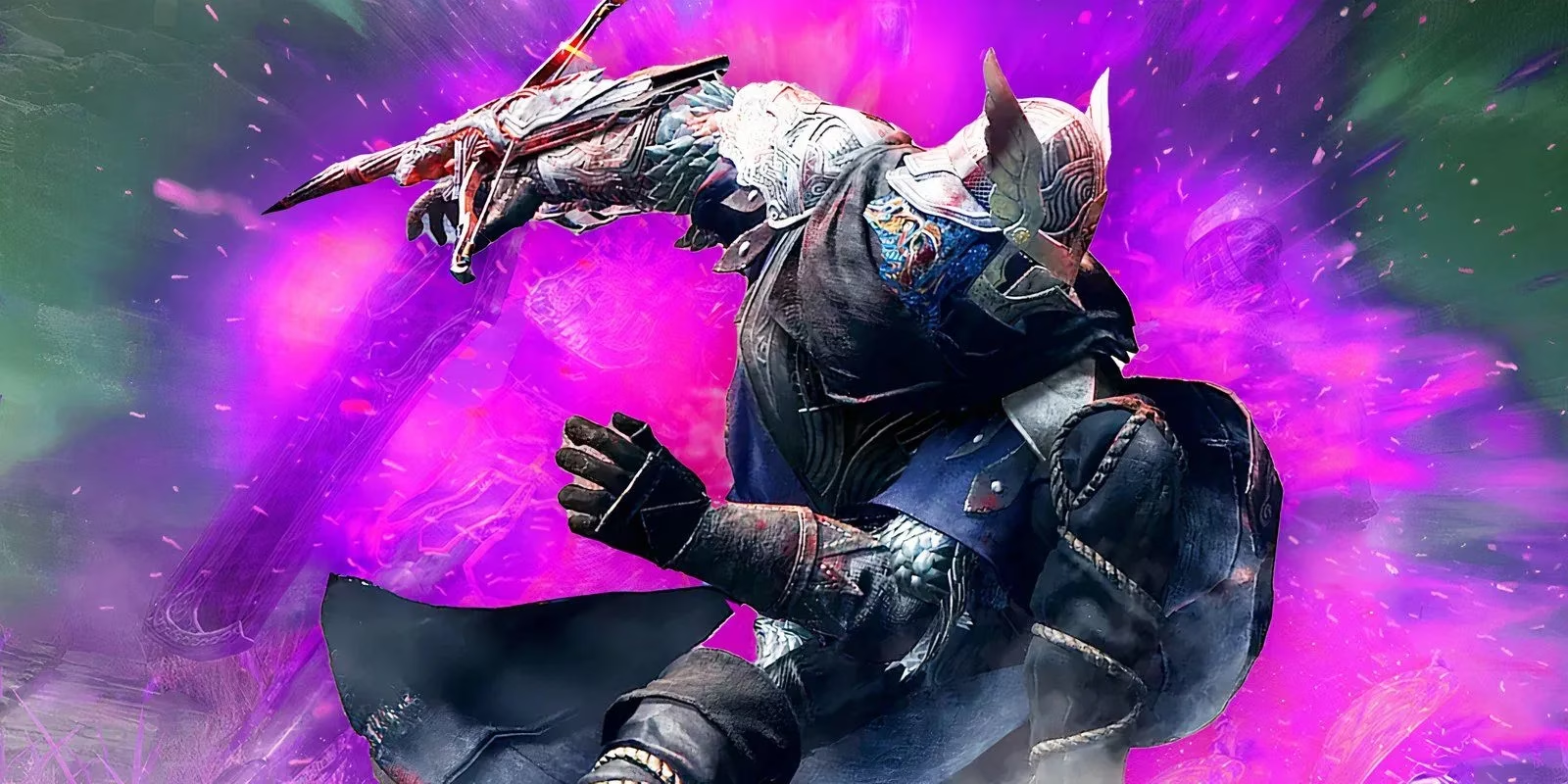
Each Character is a Cog in a Doomed Machine
Let's be brutally honest: in Nightreign, your chosen character is not an avatar of personal glory. No, you are a single, specialized cog in a complex machine that will inevitably grind to a halt if any part fails. Each playable character brings a unique, irreplaceable set of benefits to the party. What happens when the tank decides to go exploring a tunnel while the healer gets swarmed by enemies on the surface? Disaster. Pure, unadulterated disaster. The game's design actively punishes the classic "divide and conquer" approach favored in lesser co-op titles. If a character falls while isolated, their fate is sealed. Reviving them isn't a simple matter of a button press—it costs a precious level, a penalty that feels like a gut punch when facing down the terrifying Nightlord at the end of a grueling cycle.
-
Unique Roles: Every character has specific Skills and Ultimate Arts. Leaning into these strengths is not optional.
-
The Weak Link Effect: A single under-leveled or poorly built character doesn't just hold themselves back; they become an anchor dragging the entire party into the abyss.
-
Communication or Catastrophe: Without clear, constant communication on targets, positioning, and retreats, the party is just three individuals running separately toward the same gruesome death.
The Illusion of Choice: You Will Work Together or You Will Perish
While the original Elden Ring was a sprawling solo epic of lore and personal growth, Nightreign has performed a dramatic pivot. Its soul is now heavily, irrevocably skewed toward forced teamwork. The gameplay loop demands split-second, collective decisions: Do we engage this patrol? Should we retreat from the encroaching rain? Which path offers the best loot with the least risk? Playing with random matchmade teammates turns this into a chaotic nightmare. You can place all the waypoint pins you want, but if your allies ignore them, you're just decorating the map for your own funeral.
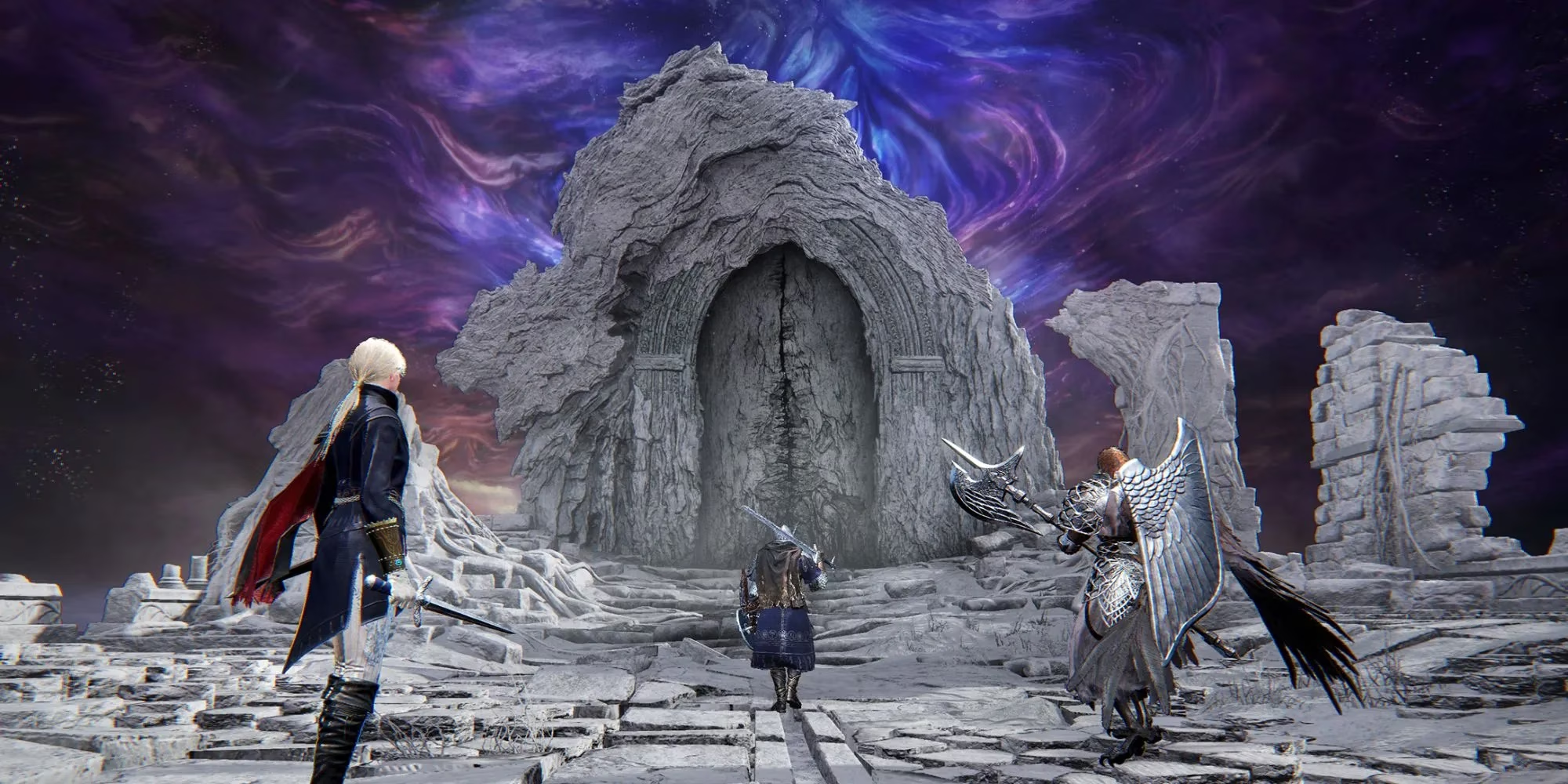
Consider this terrifyingly common scenario: One player, confident in their knowledge of Limveld's static-yet-deadly layout, charges ahead into a ruin. Another, perhaps newer or more cautious, takes a lower path through a tunnel. Suddenly, the first is surrounded, screaming for help into a silent void, while the second is ambushed in the dark, with no one to hear their demise. Verbal communication is the only lifeline, but who wants to voice chat with unpredictable strangers, especially with potential language barriers? This isn't just a difficulty spike; it's a fundamental design philosophy that filters players into two categories: the coordinated and the corpses.
The Skill Gap: The Unforgiving Chasm That Breaks Parties
Here lies the most concerning aspect of Nightreign's ecosystem in 2026. The skill level difference within the player base is not a minor imbalance; it's a canyon. Has FromSoftware implemented a robust meta-progression or skill-based matchmaking system? The evidence suggests not, and the result is a recipe for universal frustration. Veteran players, moving with practiced grace, will effortlessly outpace and outlive their less-skilled companions. The newcomers, constantly struggling to keep up, will feel like a burden, their every mistake magnified by the collective punishment.
| Party Scenario | Likely Outcome | Emotional Toll |
|---|---|---|
| The Veteran Carrying New Players | The vet does 80% of the work; new players learn little. | Vet feels frustrated; new players feel inadequate. |
| The Balanced, Communicative Team | Smooth progression, shared triumphs. | High satisfaction, strong team bonding. |
| The Team with One Weak Link | Constant wipes, resource drain, failed revives. | Rising resentment, blame, and eventual abandonment. |
An overpowered player doesn't teach—they trivialize. An underpowered player doesn't learn—they perish and drag others down with them. This dynamic means that party balance transcends gear and levels; it's about shared competence and mindset. It's why pre-made groups of friends with agreed-upon strategies are already dominating the leaderboards, while the matchmaking queues are becoming a graveyard of failed sessions and broken spirits. One player, just one, can single-handedly shatter a three-hour session. Is this fair? Is this fun? For many, the answer is a resounding no, leading veterans to seek perilous solo paths just to avoid the multiplayer gamble altogether.
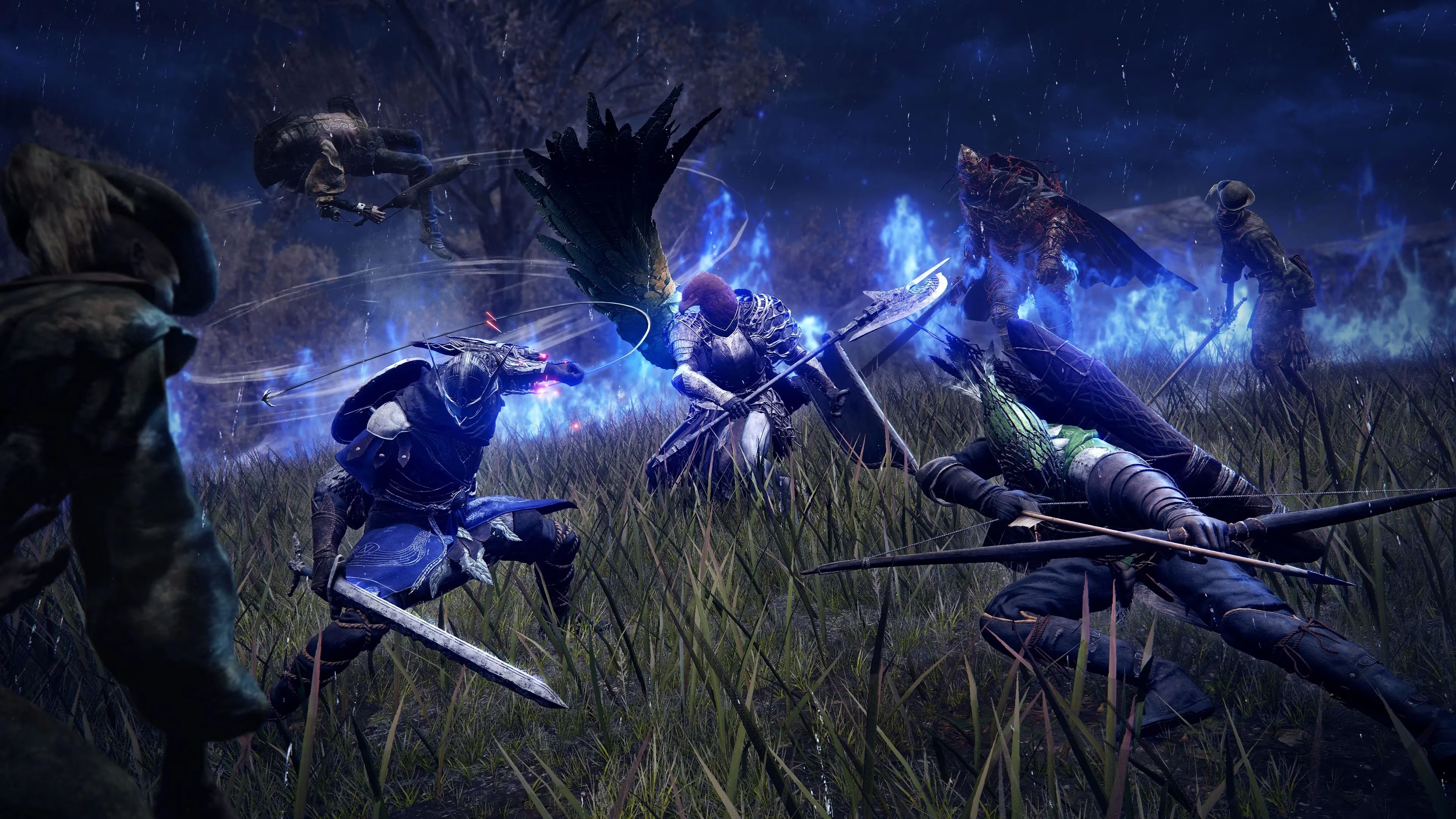
Conclusion: A Symphony of Suffering Demanding Perfect Harmony
Elden Ring: Nightreign has boldly declared that the era of the lone, stoic hero is over. In its place, it offers a vision of cooperative play so demanding that it borders on the oppressive. Party balance is the absolute cornerstone of the experience—more important than any legendary weapon or secret spell. The game is a brutal litmus test for teamwork, punishing disunity with relentless efficiency. It asks a profound question of its players in 2026: Can you surrender your individual glory for the sake of collective survival? Those who can, and who find their perfect, balanced trio, will discover a uniquely rewarding and intense co-op masterpiece. Those who cannot will find only frustration, serving as a cautionary tale in the relentless rain of Limveld. The community's future hinges on this balance. Will players rise to the challenge and forge unbreakable bonds, or will the dream of perfect cooperation dissolve into a cacophony of blame and abandonment? Only time, and countless more deaths, will tell.