
I have spent hundreds of hours in Yharnam and the Lands Between, and the longer I play them back to back, the more I see the same fever dream printed on two different kinds of parchment. Boss design at FromSoftware often works like a palimpsest: one layer of gothic ink bleeding through a newer layer of gold. FromSoftware still has not given us Bloodborne 2, and as of 2026 even Elden Ring Nightreign has come and gone without dragging us back to Yharnam. The original Elden Ring's boss roster still carries enough Bloodborne DNA to keep the comparison alive.
These games are not canonically connected. Elden Ring is a high-fantasy epic; Bloodborne is a cosmic gothic nightmare. Yet the boss roster reads like a translation.
| Elden Ring Boss | Bloodborne Counterpart | Shared Idea |
|---|---|---|
| Astel, Naturalborn of the Void | Rom, the Vacuous Spider | Lovecraftian multi-limbed horror |
| Malenia, Blade of Miquella | Orphan of Kos | Infamous duelist difficulty |
| Morgott, the Omen King | Micolash, Host of the Nightmare | Obsessive protector of doomed knowledge |
| Sir Gideon Ofnir, the All-Knowing | Gehrman, the First Hunter | Ally turned final antagonist |
| Maliketh, the Black Blade | Ludwig, the Accursed | Cursed by the mission they once served |
| Godrick the Grafted | The One Reborn | Fleshcraft from stolen bodies |
| Godfrey, First Elden Lord / Hoarah Loux | Father Gascoigne | Father figure consumed by second phase |
| Rennala, Queen of the Full Moon | Yharnam, Pthumerian Queen | Mourning mother fighting for lost child |
| Radagon of the Golden Order | Mergo's Wet Nurse | Partner trapped in a larger mythical war |
| Elden Beast | Moon Presence | Final cosmic avatar of order vs chaos |
Astel, Naturalborn of the Void vs Rom, the Vacuous Spider
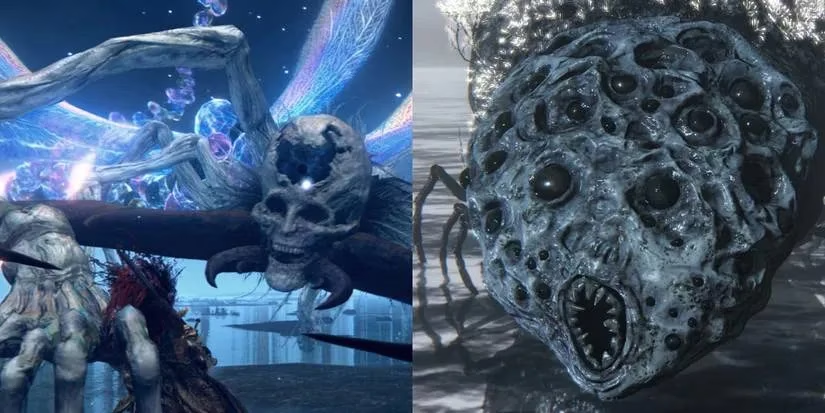
When I first crossed Astel in Elden Ring, I felt like I was looking at Rom through a keyhole in reality. Both creatures embody a kind of Lovecraftian horror that does not simply attack you; it offends your sense of what a living thing should look like. The humanoid face, the insect legs, the too-many limbs—it all creates the same unnerving effect as seeing a familiar shape through a pane of warped glass. These fights are not just about health bars. They are about the slow realization that the world is wider and more alien than the player assumed.
Malenia, Blade of Miquella vs Orphan of Kos
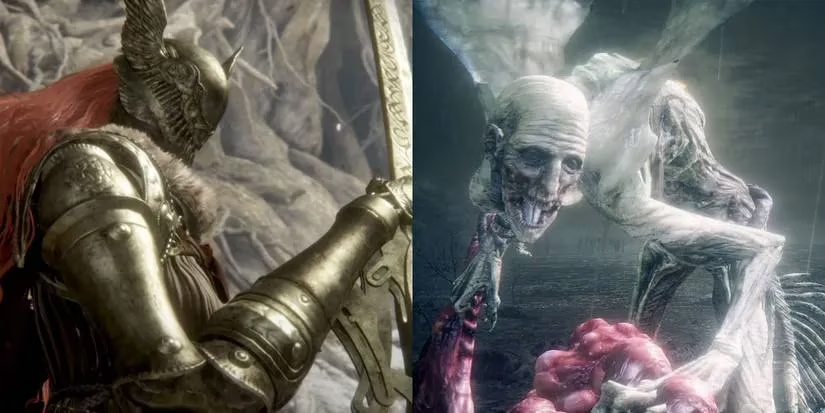
Malenia and Orphan are two different storms over the same ocean of player panic. Malenia has her deceptively readable moveset, but her healing and Waterfowl Dance turn every mistake into a punishment. Orphan, by contrast, fights like a wounded animal with no predictable script. What links them is the reputation: both are the kind of boss that makes a player close the game, breathe, and come back the next day. In 2026, with years of patch changes and community labbing behind us, Malenia still sits in the same hall of pain as Orphan of Kos.
Morgott, the Omen King vs Micolash, Host of the Nightmare
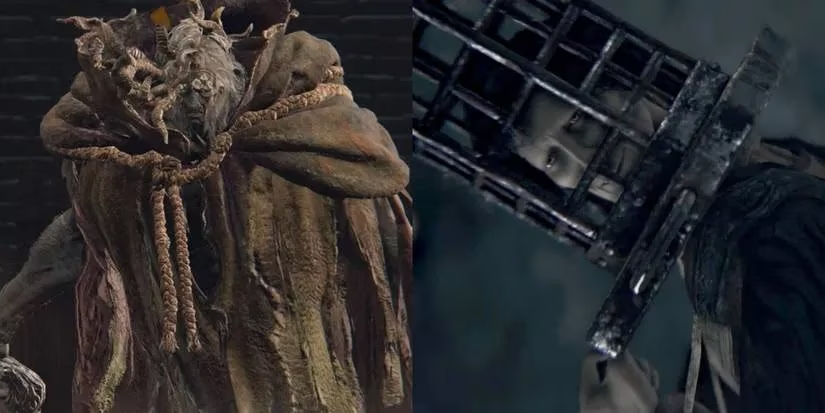
Morgott and Micolash share a tragic engine. Morgott guards the Erdtree like a man holding up a collapsing cathedral with his own ribs. Micolash chases forbidden knowledge through a nightmare that has already swallowed him. Neither one is simply evil. Both are locked inside their own obsessive devotion, protecting a power that would destroy them if they ever admitted the truth. That is why I find these fights more uncomfortable than satisfying.
Sir Gideon Ofnir, the All-Knowing vs Gehrman, the First Hunter
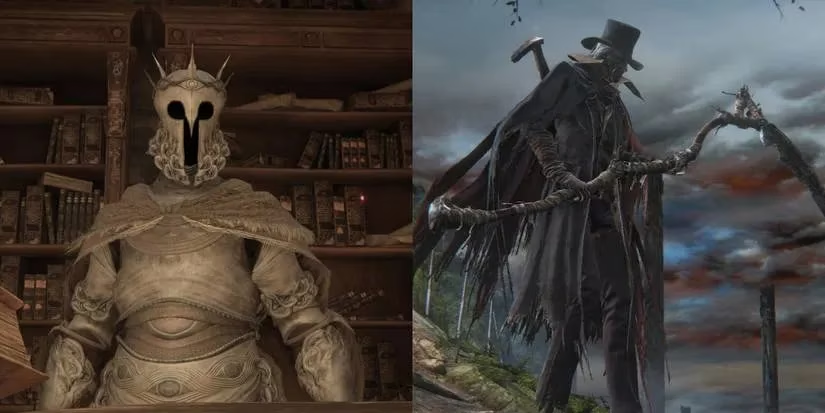
The mentor betrayal hits like a trapdoor opening under a warm conversation. Gideon and Gehrman both start as figures of guidance, only to reveal themselves as the very obstacle the hero must overcome. Bloodborne players remember the quiet shock of facing Gehrman in the field. Elden Ring players feel something similar when Gideon arrives near the end, no longer the All-Knowing ally but a man clinging to his own interpretation of fate.
Maliketh, the Black Blade vs Ludwig, the Accursed
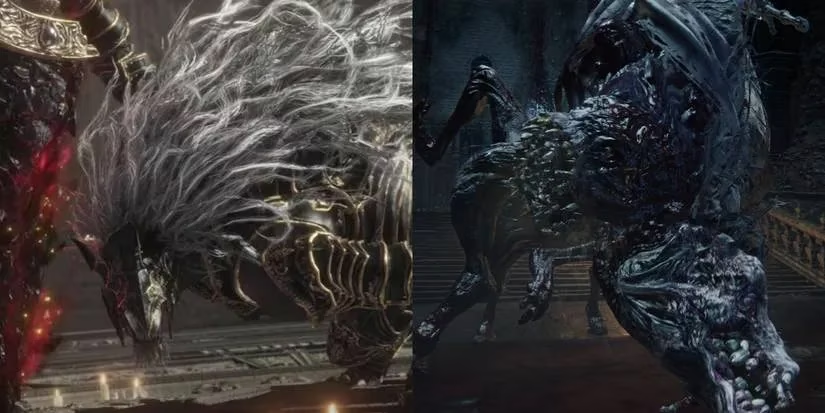
Both Maliketh and Ludwig are tragic engines running on the fuel of their former virtue. Ludwig was once a heroic hunter; Maliketh was once the shadow entrusted with Destined Death. By the time the player finds them, each has become a vessel for the very force they tried to control. This is a recurring FromSoftware lesson: devotion without rest can turn a protector into a monster.
Godrick the Grafted vs The One Reborn
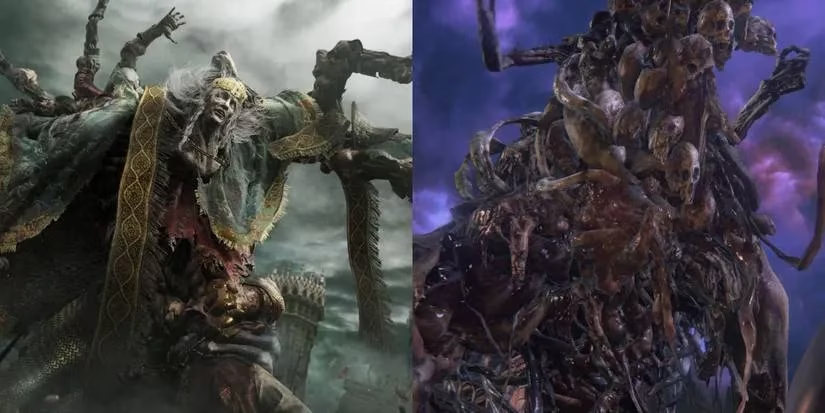
Godrick and The One Reborn are the most obvious visual cousins on this list. Both look like a cathedral made of stolen bodies. The One Reborn is a mass of assimilated corpses; Godrick grafts limbs onto himself in a desperate bid for power. The irony is that both are also surprisingly slow compared with the frenetic pace of their games. That slowness is not mercy. It is the awful weight of too much borrowed flesh.
Godfrey, First Elden Lord / Hoarah Loux, Warrior vs Father Gascoigne
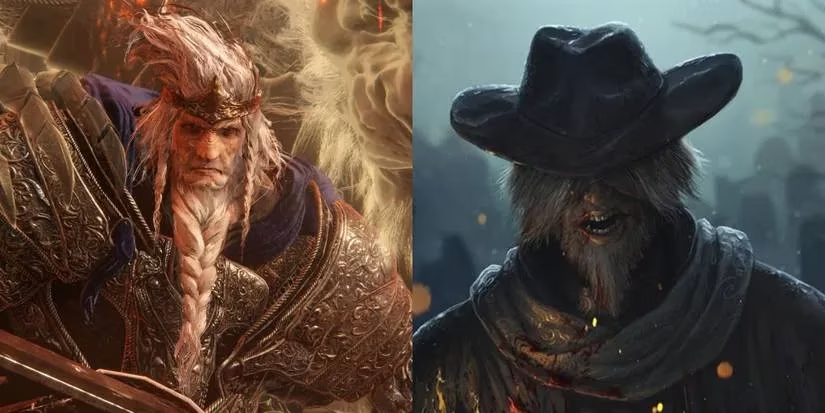
Father Gascoigne and Hoarah Loux are both fathers swallowed by their own second phases. Gascoigne loses himself to bloodlust; Godfrey abandons the mantle of First Elden Lord to fight as Hoarah Loux, Warrior. Both battles are dual-part nightmares where the first phase teaches you a rhythm and the second phase tears up the sheet music. The paternal shadow hangs over both: a man who was meant to protect becomes the thing you must kill.
Rennala, Queen of the Full Moon vs Yharnam, Pthumerian Queen
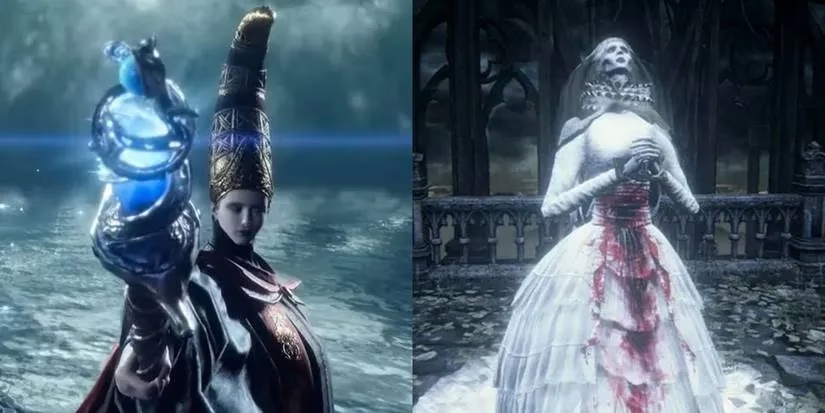
Rennala and Yharnam are mourning mothers fighting a war they have already lost. Rennala clings to a golden egg she believes will revive her daughter; Yharnam protects an unborn child whose fate is already sealed by the larger story. Both queens cradle impossible hope like a cracked bell still trying to ring. Their battles are not triumphant. They are quiet tragedies wrapped in boss mechanics.
Radagon of the Golden Order vs Mergo's Wet Nurse
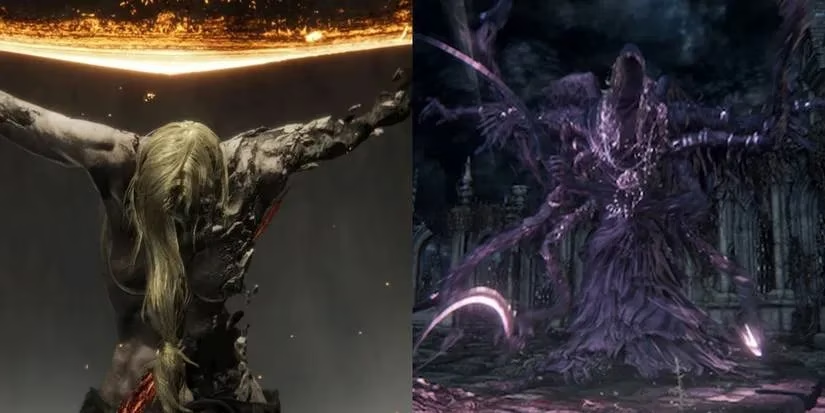
Radagon and Mergo's Wet Nurse are partners trapped in someone else's metaphysical war. Radagon's faith cannot shield him from the Shattering, and the Wet Nurse exists mainly to prevent the player from reaching Mergo. Both feel like instruments of a larger will, stripped of the luxury of a truly independent motive. That is why they are among the loneliest bosses in their respective games.
Elden Beast vs Moon Presence
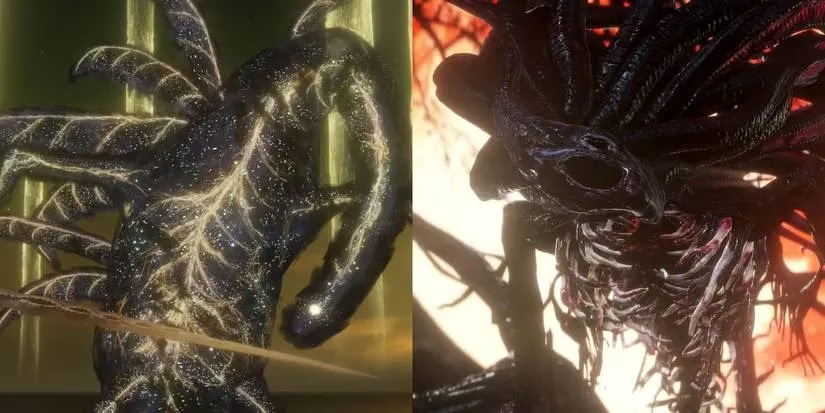
Finally, the cosmic avatars. Moon Presence and Elden Beast are two opposite poles of the same cosmic battery. The Moon Presence arrives at the end of Bloodborne as a chaotic, alien hunger; the Elden Beast emerges from Radagon as a perfect instrument of order. Both reject the humanoid shape of their vessels and become something larger, more abstract, and more terrifying. They are the final proof that FromSoftware likes to end its myths by pulling the camera back and showing the player how small the entire journey has been.
In 2026, I still want a Bloodborne sequel, but until then, Elden Ring's remembrances feel like a séance for its predecessor. The bosses are not copies. They are echoes, and FromSoftware has spent years learning how to arrange those echoes into new nightmares.