
As I wander the fractured Lands Between, my spirit heavy with the weight of shattered runes, I find myself walking not just through Miyazaki's brutal dreamscape, but through a realm that whispers with the same ancient voices that once sang to Tolkien. My journey is not one of simple quests; it is a pilgrimage through themes as old as storytelling itself. The golden Erdtree, a pillar against a bleeding sky, feels as mythic as the White Tree of Gondor, yet its light is a different, more ambiguous kind. My purpose, to mend the Elden Ring, is a stark inversion of the Fellowship's sacred burden to destroy the One Ring. Where they sought to unmake a symbol of absolute dominion, I am tasked with claiming it, wrestling with the very concept of power that Tolkien’s heroes so desperately fled. This is the first, profound resonance I feel—a shared meditation on the allure and peril of the throne, explored from opposite sides of the same golden, cursed coin.
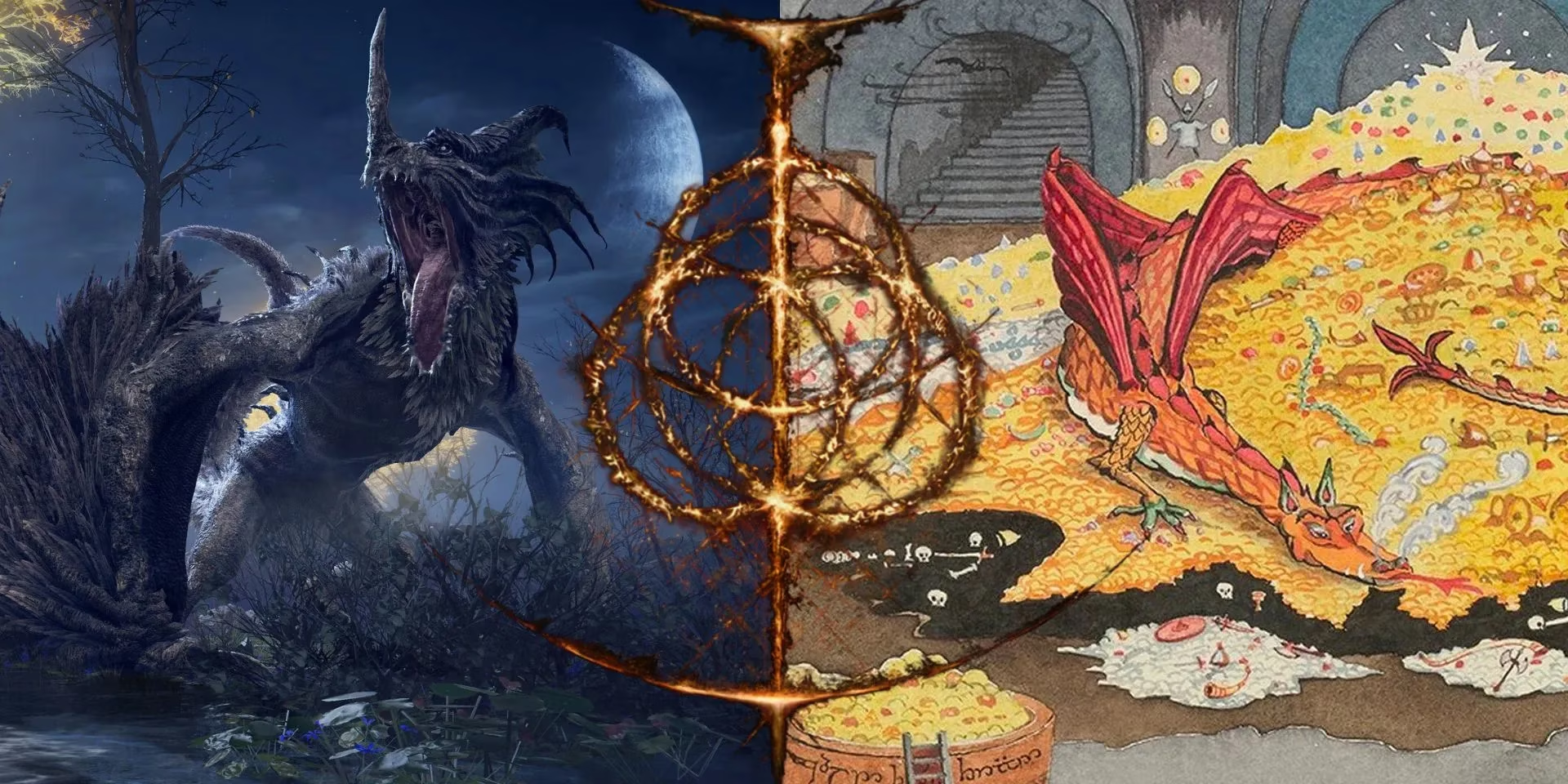
My mind drifts to the roots of these worlds, buried deep in the soil of forgotten myths. I recall the old tales, the ones that shaped my understanding of heroes and gods long before I held a controller. Tolkien wove his tapestry from many threads: the melancholy courage of Beowulf, the magical songs of the Kalevala, and most potently, the grim, majestic cycles of Norse sagas. I see Odin in Gandalf’s wanderings, and I feel the doom of cursed rings in the very air of Mordor. And through it all, a gentle, persistent light—the Christian virtues of mercy and sacrifice that give The Lord of the Rings its profound heart.
Now, in 2026, as I stand beneath the gargantuan boughs of the Erdtree, I recognize Yggdrasil, the World Tree, reborn in digital splendor. The Demigods I battle—proud, flawed, warring—are the Aesir and Vanir of a new age. The Fire Giants, the coiled serpents, their ancient grudges mirror the eternal strife of Jotun and God. Yet, the imagery shifts. The crucified forms of Marika and Radagon inject a stark, Abrahamic iconography into this Norse framework, creating a pantheon that feels both familiar and terrifyingly alien. It is not a copy, but a conversation—a dark, glorious symphony played on instruments forged from the same primordial ore.
A long road lies behind me, littered with the cryptic words of lost spirits and mad prophets. This, I realize, is another sacred parallel. Tolkien despised the cage of allegory. He spoke of applicability—the story as a mirror, not a map. Middle-earth was not a lesson about war or industry; it was a world so complete, so true, that I could see my own struggles reflected in its pools. FromSoftware, in its genius, has built its philosophy upon this very principle. The Lands Between offer no easy answers, no moral compass. Factions like the Golden Order or the Followers of Frenzy preach with absolute conviction, yet their truths are fragments, perspectives warped by desire and dogma. The game lays the shattered lore at my feet and says, You decide. The weight of that freedom is immense. Am I restoring order or perpetuating a tyranny? The choice, and its consequence, is mine alone to interpret. This narrative silence is not an absence, but the deepest form of respect for the traveler.
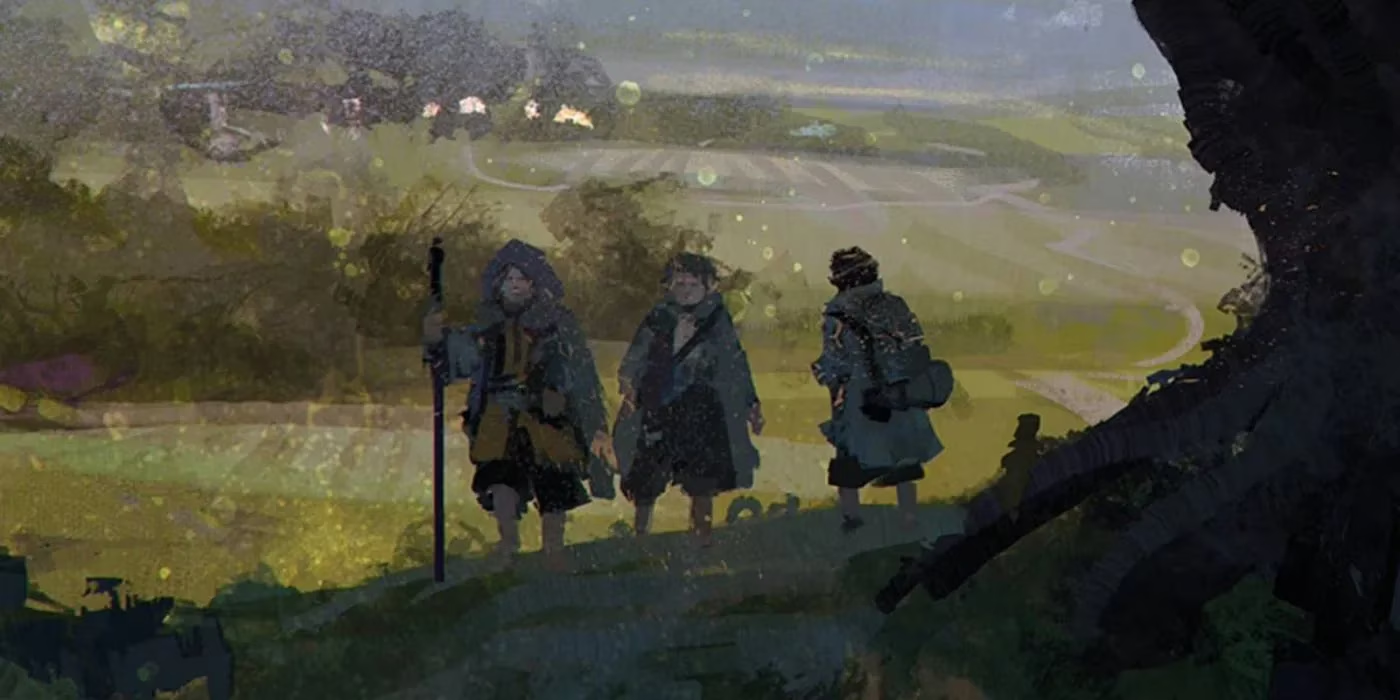
And what of the power I seek? The memory of Galadriel’s transformation is seared into my mind—her majestic, terrible visage as she envisions the queen she would become with the Ring. Beautiful and terrible as the dawn. I have seen that same terrible beauty in Queen Marika, the golden sovereign who shaped reality itself. She is Galadriel’s warning made flesh, a being who grasped ultimate authority and found herself imprisoned by it. Sauron and Saruman sought to dominate all life, to bend the world to their will. In my journey, I have come to see Marika not as a distant goddess, but as a Sauron who succeeded. Her empire is the result of that victory, and it is a gilded ruin. The lesson echoes across both epics: the pursuit of mastery for its own sake is a path that consumes the ruler and crushes the ruled. True strength, both sagas whisper, may lie not in seizing power, but in the wisdom to let it go—or to wield it with a hand untainted by the hunger for domination.
Yet, for all these profound harmonies, a striking dissonance defines my experience. It is in the treatment of the other, the monstrous, the divine. In Tolkien’s legendarium, the divine order, though distant, is fundamentally good. Evil is a rebellion, a marring of that goodness. Orcs are born of corruption; darkness is an active, malevolent force. The Lands Between offer no such comfort. Here, the Outer Gods are inscrutable, their influences invasive and often horrific. And the so-called monsters... my heart aches for them. The Misbegotten, twisted and scorned; the Omens, cursed with horns they never asked for; Those Who Live in Death, seeking only a place to exist. They are not absolute evil. They are the victims, the others persecuted by a regime that needed demons to justify its purity. The Golden Order’s zealots, in their crusade for perfection, created the very enemies they feared. This humanistic, tragic view of fantasy ‘races’ is Elden Ring’s most poignant departure, a modern reflection on the sins of orthodoxy and the beauty of the malformed.
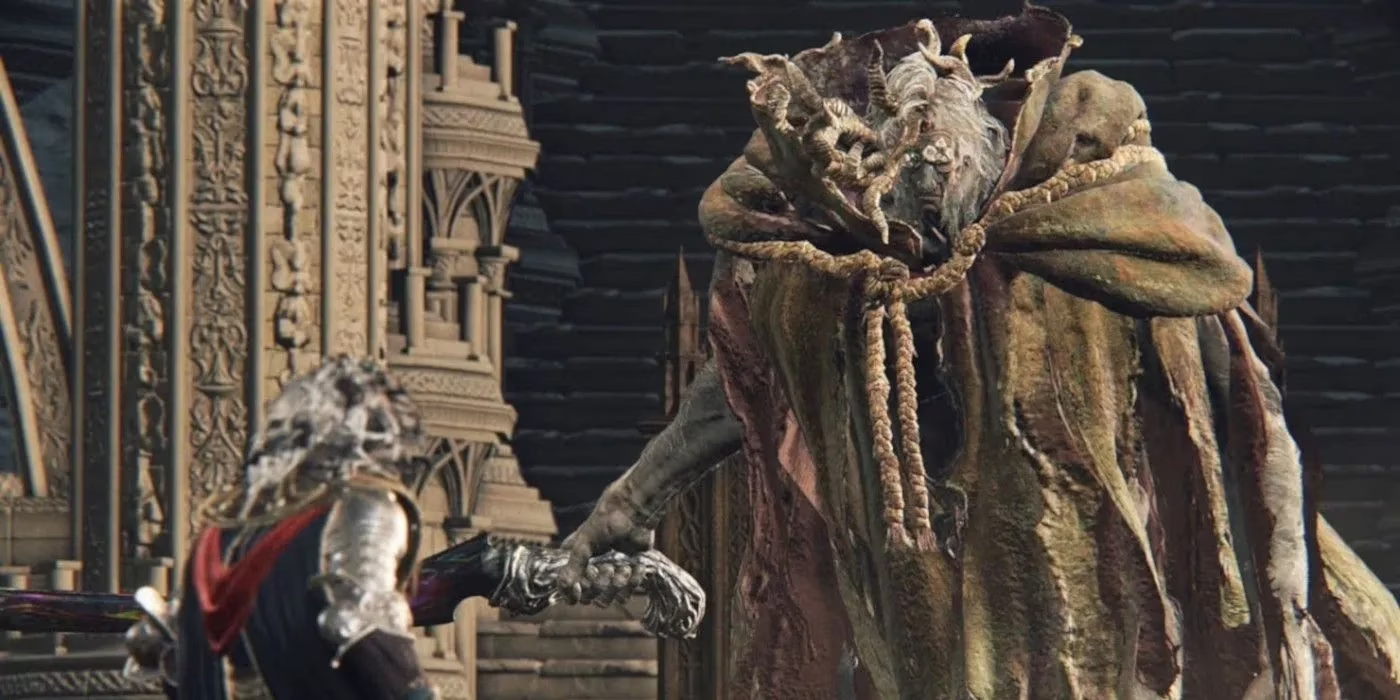
So here I stand, a Tarnished on the precipice of godhood. The echoes of Middle-earth are all around me—in the mythic scale, the fear of the ring, the silent trust in the reader, the warning against tyranny. But the melody is my own. I am not destroying a ring to save a world from clear darkness. I am gathering its pieces in a world where light and dark have bled into a thousand shades of grey. My journey through Elden Ring has been, in essence, a dialogue with the spirit of The Lord of the Rings. It has taken the deep, mythic questions Tolkien posed—about power, corruption, freedom, and divinity—and plunged them into a darker, more ambiguous crucible. It proves that the oldest stories never die; they are reforged, their themes tested under new and terrible pressures, offering fresh despair and fragile hope to those of us still willing to listen to the whispers of the ancient world.
This discussion is informed by storefront and community context from Steam, where player reviews and tags around Elden Ring frequently emphasize its lore-by-fragments approach, mythic atmosphere, and moral ambiguity—useful touchpoints when comparing the game’s “mend the world” premise to Tolkien’s inverse impulse to unmake corrupting power, and when reflecting on how different endings can feel less like a single canon and more like a personal reading of the same shattered legend.